
Bangkok, Two Floors and a River
Henry arrives in a city stacked two floors deep – the steaming street at ground level and the glass walkways gliding above it – and stays until the abundance tires him and the great river carries the evening home.
Chapters
- 00:00Welcome (what this channel is)
- 01:06The aeroplane doors, where Thailand begins
- 01:56The train on its ribbon
- 03:43Sukhumvit at ground level
- 06:56Lunch at a folding table
- 09:11The stairs to the second city
- 10:57The malls
- 11:36A hundred kitchens
- 12:49The sushi evening
- 14:01The turn
- 14:37The river opens
- 17:10The ferry ride, temples lighting one by one
- 19:59Night market
- 22:12The fruit vendor and the cat
- 23:21Packing, and the river inked wider
- 25:34Goodnight from the river
The full story, in writing
The complete narration as it was recorded, about 3,806 words. Read it here, or listen to it on YouTube.
Tonight: Bangkok.
It was turning cold at home when I left — the kind of cold that gets into the pencil jar — and I had promised myself, for once in my life, a warm horizon. You should know that in thirty-four years of drawing maps I drew Asia many times and never once stood in it. Bangkok, to me, was a dense little star of streets where three of my colleagues' maps met, a name I had written small because the city was far away and the paper was full. I owed it an apology before I ever landed. I did not know that yet.
The aeroplane doors are where Thailand begins. Not the runway — the doors. They opened, and the heat came to meet me: not a wall, nothing so unfriendly — a blanket. A warm, damp, patient blanket the size of a country, laid over my shoulders in the middle of the night as though somebody thought I looked cold. And it does not matter, I would learn, whether you arrive at noon or at midnight, in their winter or their summer. The blanket is always there. The country simply runs warm, the way some houses do, and after the cold I had left behind I stood on the walkway a moment and let myself be hugged.
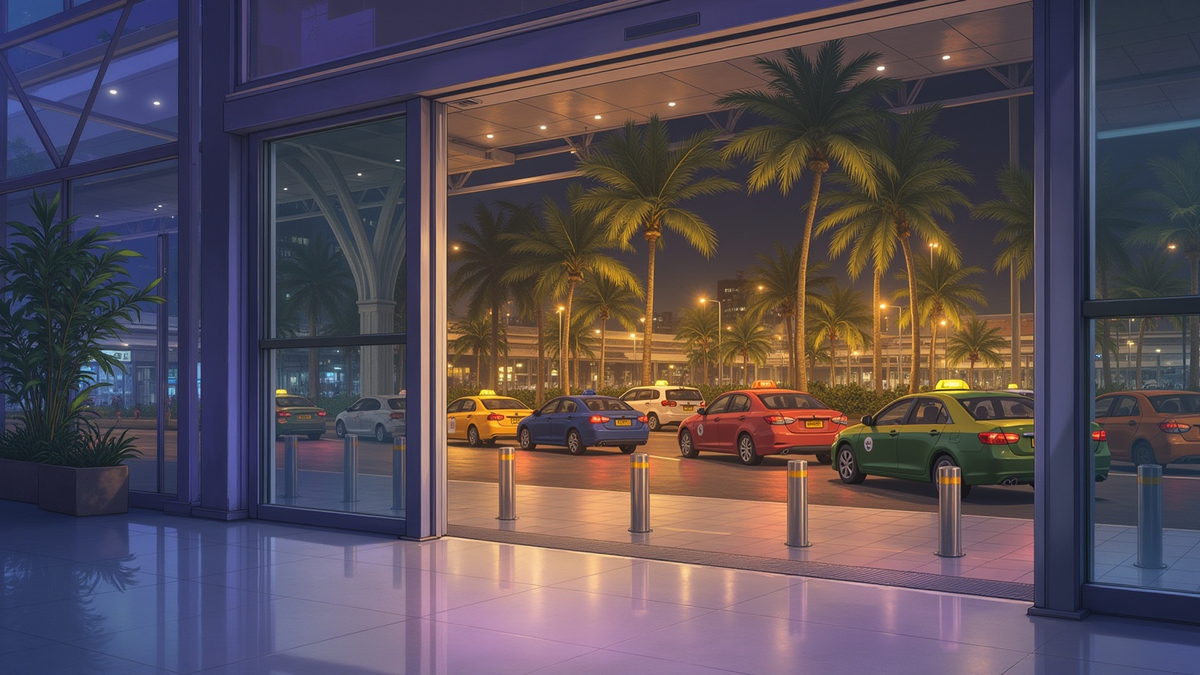
At the taxi rank a family was coming undone in the way only airport families can — four suitcases, two sleeping children, a grandmother guarding a box tied with string — and when the next car came up it was somehow my turn and not theirs. That arithmetic was not going to survive the night, so I gave them the car and the box rode in front. There is a train instead, it turns out, a quiet grey one on a high concrete ribbon, and I rode into the city above it all with my bag on my knees, watching lit streets slide underneath me like a map being pulled slowly off a table. I did not know it then, but that train had just taught me the first true thing about Bangkok. I was arriving on the upper floor.
That first night I did go down to the street, briefly, the way you dip a toe. I stood at a crossing where six lanes of traffic became, by some agreement I never saw signed, eight, and the air was warm soup with neon in it, and the whole street was cooking and selling and laughing and hooting all at once, at ten o'clock at night, as though the day had simply declined to end. I am a man who plans his walks. I stood there and admitted, happily, that no plan of mine was going to survive this town — then I bought a bag of pineapple from a cart because it was the one thing I understood, and went to bed defeated and delighted, which I recommend as a combination.
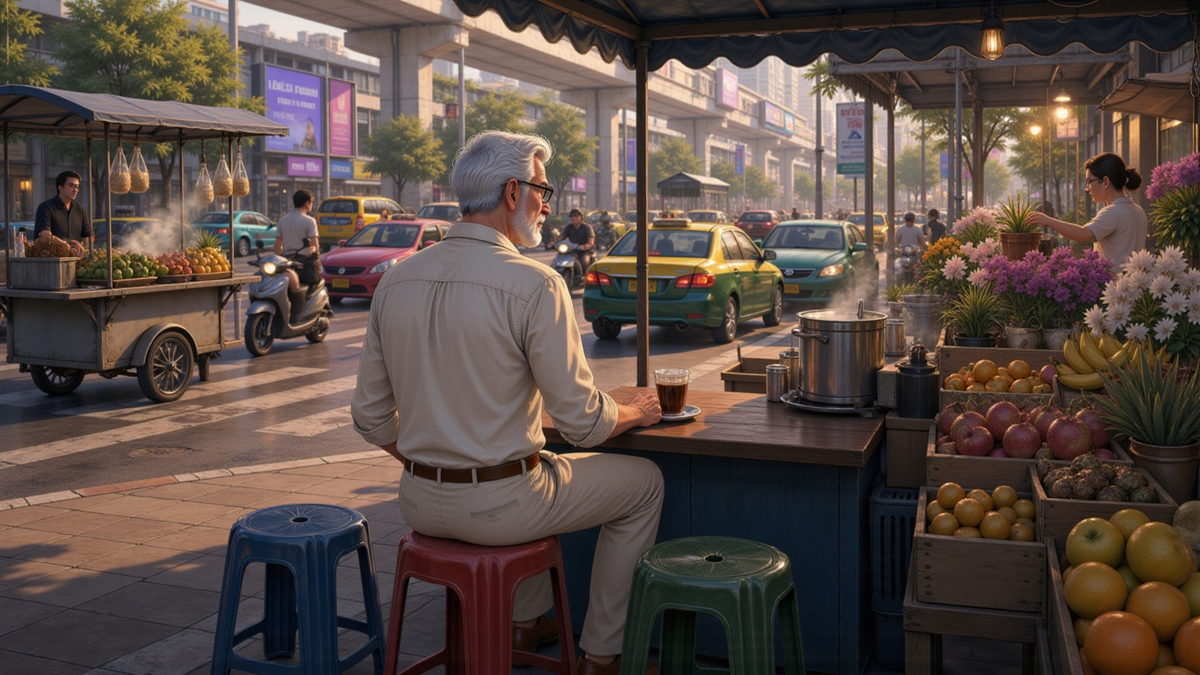
I slept the sleep of the long-hauled, and in the morning I went down into Sukhumvit properly. Sukhumvit is one street on my map. One line, one name. On the ground it is a world in the shape of a street, and the ground is where it does its living: taxis in every colour a taxi has ever been, scooters moving through the traffic like water finding gaps, food carts along the pavements with their steam already up, fruit stalls built like market gardens, a man welding something, a woman arranging orchids, all of it in motion at once and none of it — this is the miracle — none of it colliding. It is loud, and it is quick, and it is completely unbothered. The city has clearly agreed on something all its people know and no visitor is told. You stand in the middle of it grinning like a fool, understanding nothing, perfectly safe. The first morning anywhere belongs to an ordinary place with coffee, and mine was a stall with three plastic stools, where a woman made me a coffee sweeter than my dentist would forgive and I watched Sukhumvit conduct itself. I said thank you in Thai — khop khun krap — which I had practised on the aeroplane, and she smiled the way you smile at a man who has practised on the aeroplane. I would say it eleven times before lunch. It is a language you say with a small bow built in, and I recommend it.
I made a habit of that stall, and the habit taught me the street's timetable. Early — earlier than a man on holiday has any business being awake, though the time difference decided that for me — the street belongs to a different city. The monks come first, before the proper light, barefoot, in robes the colour of marigolds, walking the pavements in silence with their round bowls, and people step out of doorways to put food in the bowls and receive a blessing, and nobody hurries any part of it. I watched from my three-legged stool with my sweet coffee and understood that I was seeing the oldest traffic in the city, older than the river ferries even, and the quietest. Then the ice arrives — great cloudy blocks of it on handcarts, sawn to order on the tailgate, because a city this warm runs on cold the way mine runs on coal — and the men in orange vests take up their posts at the mouths of the side streets, motorbike taxis waiting for the first commuters, and the woman with the orchids builds her wall of purple, and by seven the whole machine is turning, and it has all been assembled in front of you from silence, in an hour, without one raised voice.
Now, about the eating, because Bangkok does not let you postpone the subject. I must confess something: I had never in my life eaten street food. Not anywhere. A lifetime of maps teaches caution — you learn how many things can go wrong between two points — and I arrived with a traveller's full set of reservations. They lasted a day and a half. It starts with fruit, because fruit looks innocent: a bag of pineapple cut before your eyes, cold and sharp and better than any pineapple has a right to be. Then it is something grilled, because the smell walks over and takes you by the sleeve. Then it is noodles at a folding table, because you saw an office worker and a tour guide and a taxi driver all eating at the same one, and there is no better restaurant review in the world than that. Mine came in a bowl the size of a hat: broth the colour of good leather, noodles pulled from a cloud of steam, herbs torn over the top by the handful, and on the table a little rack of jars so you could steer the whole thing sweeter or hotter or sharper to taste — the driver beside me adjusted his like a man tuning a radio, and I copied him, badly, and it was still the best thing I had eaten in a fortnight of remarkable eating. And then you are simply lost, in the best way. Wherever you stand in that city, something wonderful is being cooked within fifty metres of you. You can choose any stall you like. The odds are with you everywhere. It costs less than the coffee at my airport at home, and it is cooked in front of you by somebody who has made that one dish so many times their hands do it alone. I have never been anywhere that eats like Bangkok — so well, so cheerfully, and at every hour I was awake to check.
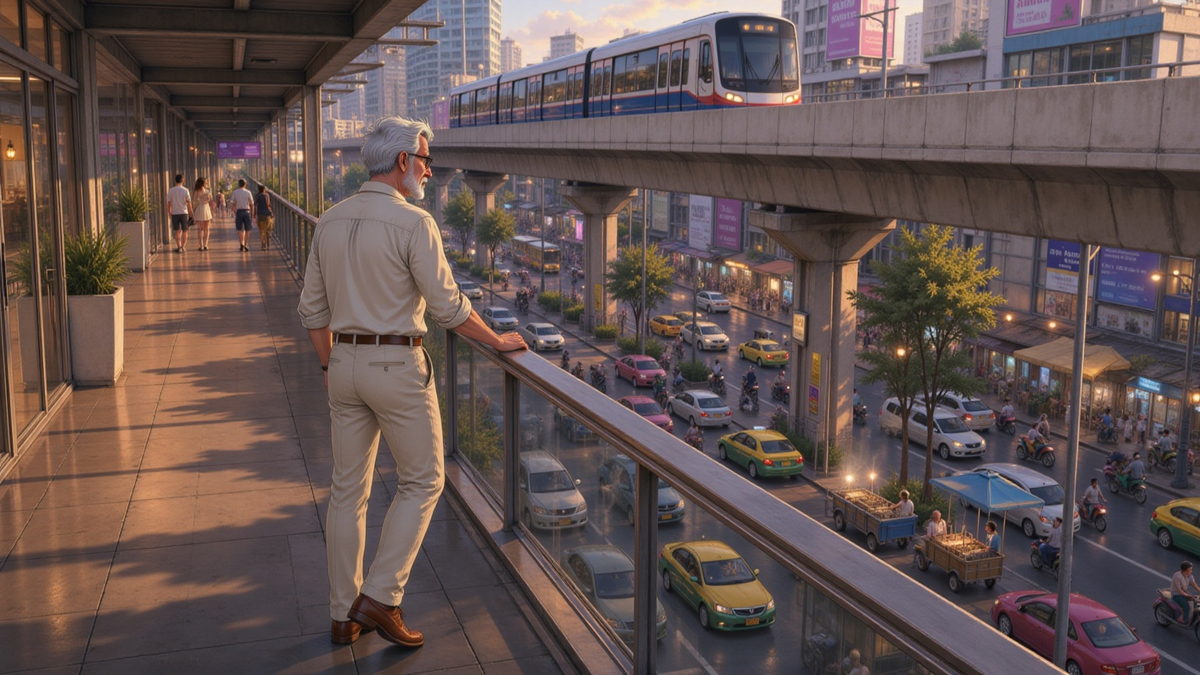
The second floor I had glimpsed from the train asked for a proper visit, so one hot afternoon I climbed the stairs. Above Sukhumvit — directly above it, on that concrete ribbon — the trains go gliding, and beside the trains run walkways, and off the walkways open doors, and the doors belong to shopping centres. You can walk, I discovered, from mall to mall to mall, high over the traffic, in cool air, never once touching the ground: the same street twice, one city stacked on another. Below, the scooters and the steam and the orchids; above, a long glass gallery gliding over it all. I made a slow ceremony of that walk. Through the glass underfoot and alongside, the ground floor carries on beneath you like weather — the taxis nosing forward, the carts trailing their steam, a delivery man asleep on his parked scooter with his heels on the handlebars — and you glide above it in air-conditioned quiet, watching your own street the way you would watch fish in an aquarium. Two minutes earlier I had been a fish myself. That is the oddness of the stacked city: you change floors and you change species, and the stairs take less than a minute. My profession never had a good answer for this. A map is flat because paper is flat, and so my Bangkok had been one line with one name, and here the truth was two cities deep and I had drawn half of it.
As for the malls themselves — I thought I knew what a shopping centre was. I did not. They open into each other like chapters. Whatever you can think of, somewhere in there a person is presenting it to you beautifully: the finest brands and the cheerful imitations, computers, silk, kitchens, and at one point, I am almost sure, cars. I went in doubting a shopping centre could have much to show a man from the old world, and I came out having quietly torn that opinion up.
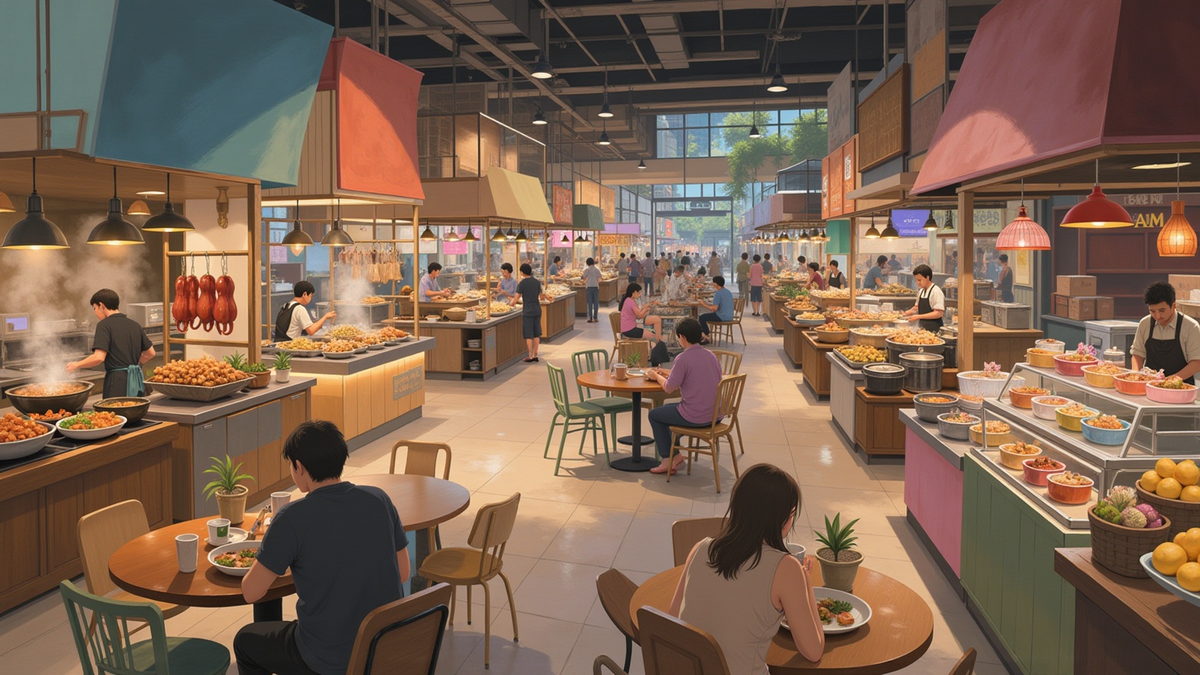
But the upper floor's real secret is the food courts. Behind the marble and the mannequins, every one of those buildings keeps a floor that is honest about what matters: a hundred small kitchens under one roof, and on the plates, the world. Thai food first and gloriously — but also whole streets of Japan just east of here, in the neighbourhoods called Thonglor and Ekkamai, and Korean kitchens, and, should the mood take you, a pizza with a proper sourdough crust. The prices are kind. The cooking is serious. You pay with a little card the counters all accept, which took me one embarrassed afternoon to understand. The next day, at the card machine, an elderly couple stood holding the queue with the exact confusion I had pioneered twenty-four hours earlier, and I topped their card up with mine and showed them where to tap. Yesterday's fool makes a useful guide; it is the fastest promotion I have ever had.
And one evening, the fish. I had been steered toward one Japanese place all week — recommended once, then twice, then practically ordered — and I will keep this short, because superlatives are heavy and it is late: I have eaten carefully all my life, and that evening rearranged the top of the list. It was not inexpensive, and I would pay it again without being asked twice. But here is the part I carried home. It was not only the fish. It is what this city does with flavour generally — sweet where you expected fire, sour arriving exactly when the richness needs it, fruit sitting beside chilli as though they had grown up together. Bangkok cooks the way a good cartographer draws: nothing on the plate by accident, everything exactly where it must be for the whole to make sense. My mouth spent a fortnight being politely corrected, and I have come home a humbler man about what goes with what.
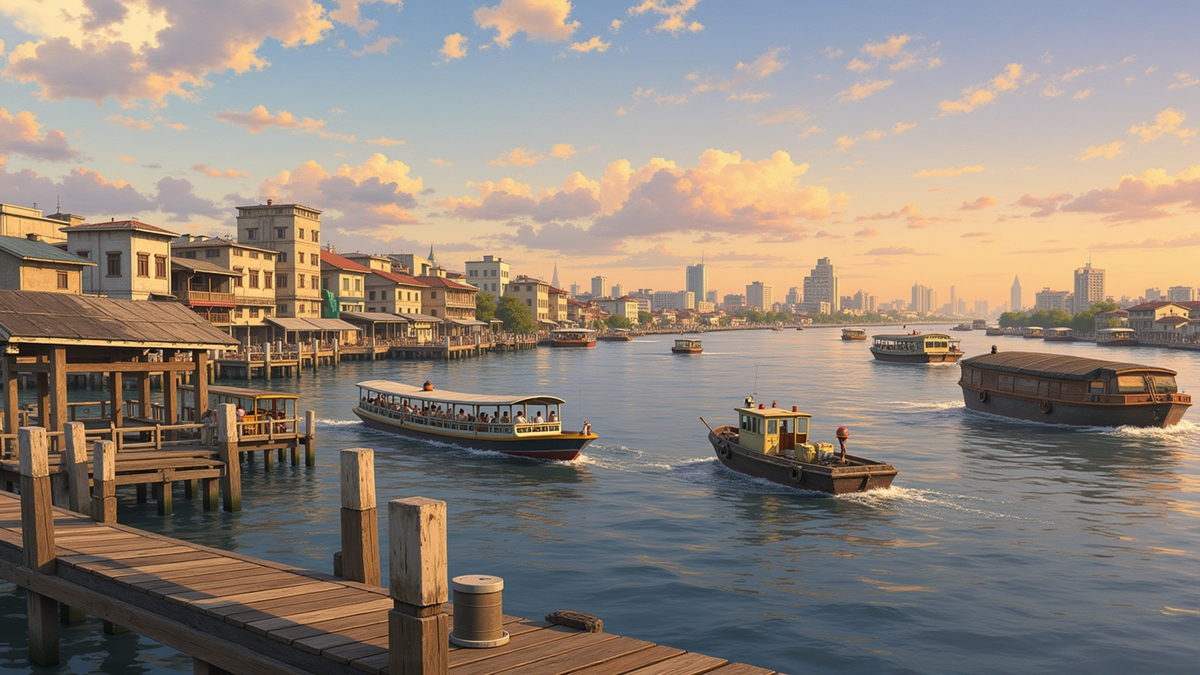
Here is the thing, though, about abundance. Even wonder tires. On the fourth or fifth day, full of marvels and slightly deaf, I took a side street simply because it was narrow and pointing away from everything, and I followed it past shuttered shops and sleeping cats, and the street got quieter, and older, and then it stopped — at water. A landing stage, a ticket booth the size of a wardrobe, and a pier.
The river. I knew it was there — I had drawn it, after all, a confident blue stroke through my colleagues' city — but no line I ever inked prepared me for the size of it. It is a serious river, wide and brown and muscular, moving through the middle of everything with the calm of the only adult in the building. And it is not scenery. It works. Ferries cross it and run along it like buses — numbered, frequent, absurdly cheap — barges go up it in long linked lines, narrow boats stitch between them, and the city stands along both banks facing the water, because the water, I finally understood, was here first. The streets came later. The river is Bangkok's original road, the oldest street in the city and the only one that moves. I sat down on the edge of the landing stage for a minute before committing myself, because some meetings deserve a pause. The boards under me rose and settled with the wake of every passing boat, the whole pier breathing slowly like something large asleep, and nobody hurried me, and the city behind my back seemed suddenly optional. Then I bought a ticket from the wardrobe and got on.
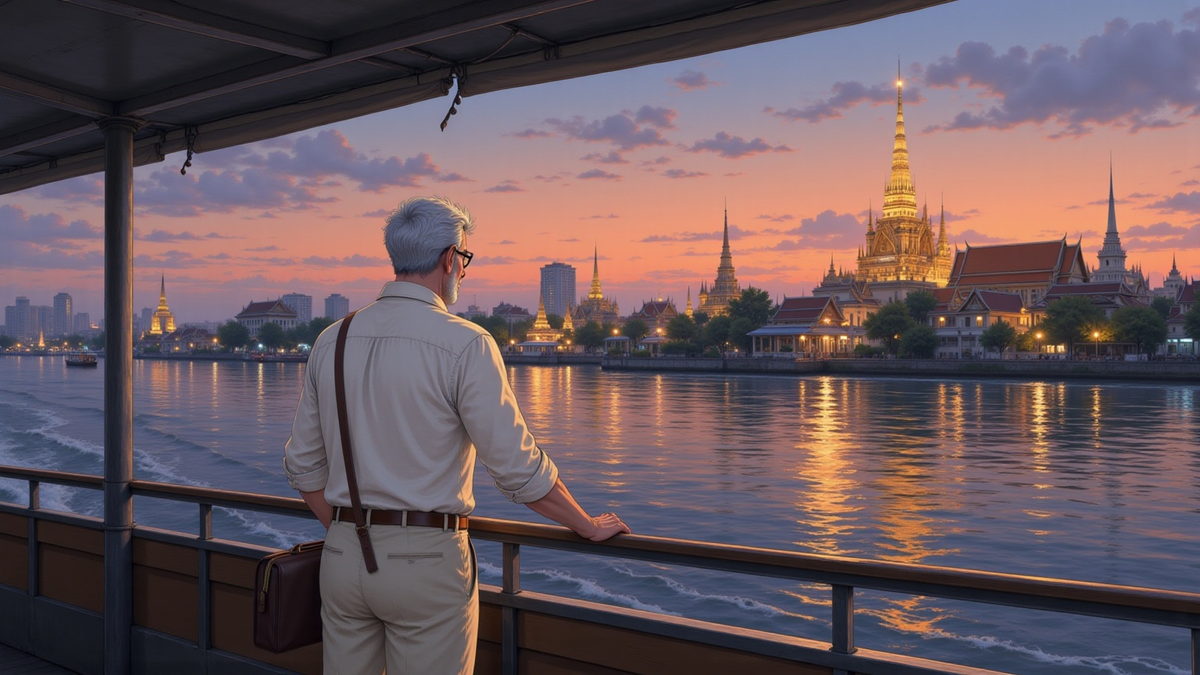
If you want my advice about Bangkok, it is this: do it all — the stalls, the stairs, the glass galleries — and then, when your ears are full, go and sit on a ferry. Mine worked the river like a bus route, and it had a bus's unglamorous good manners: swing in to the pier, a rope thrown and caught, a sharp little whistle from the boy at the stern — the whole conversation of the landing is conducted in whistles, one for slow, one for go, and I never fully broke the code — and then out into the current again before you have found your seat. Schoolchildren rode it with their shoes off and their homework out. Office workers rode it reading. At the bow there is a bench they keep for monks, and twice a saffron robe sat there with the wind in it, perfectly still, like a candle flame that had decided against flickering.
The boat pulls out, and the city turns sideways. The traffic is still there, somewhere behind the buildings, but the river does not honk. There is a breeze on the water that the streets never told me about, the first free wind in days, and the great city goes by at the pace of a man rowing. And the banks tell the city's whole story, out of order, the way rivers prefer it: a glass tower, then a warehouse with a rusted crane, then wooden houses standing in the water on stilts with their washing out and their steps going straight down into the river, then a hotel like an ocean liner that has given up the sea, then a school letting its children out onto a jetty. Centuries stand shoulder to shoulder along that water and nobody has asked them to form a queue. A map wants a city to be one age at a time. The river knows better.
And the temples. On both banks, temples — spires the shape of closed flowers, roofs stepped like hills drawn by a child, gold where the late sun finds them. I did not learn all their names, and I am not going to pretend to you that I did. From the water they do not need names. They stand at the river's edge the way lighthouses stand at the sea's, facing the traffic of boats as they have for centuries, and as the light goes down the city switches them on, one by one, and each one lays its reflection on the water like a signature. The dusk out there has stages, and the river shows you every one. First the gold goes off the spires and the sky does its brief pink business. Then the working boats thin out, and the water calms from brown to pewter, and the first lamps come on along the banks — house lamps, jetty lamps, one string of coloured bulbs outside a riverside kitchen — each with its little copy hanging upside down in the water. Somewhere in a courtyard a temple drum was beaten slowly, the way they mark the evening, a sound so low you feel it arrive through the boat before you hear it. And the heat, which had worn me all day like that blanket from the airport, loosened at last into something silk-weight and kind. I rode long past my stop for it. The ferryman had seen my kind before and said nothing.
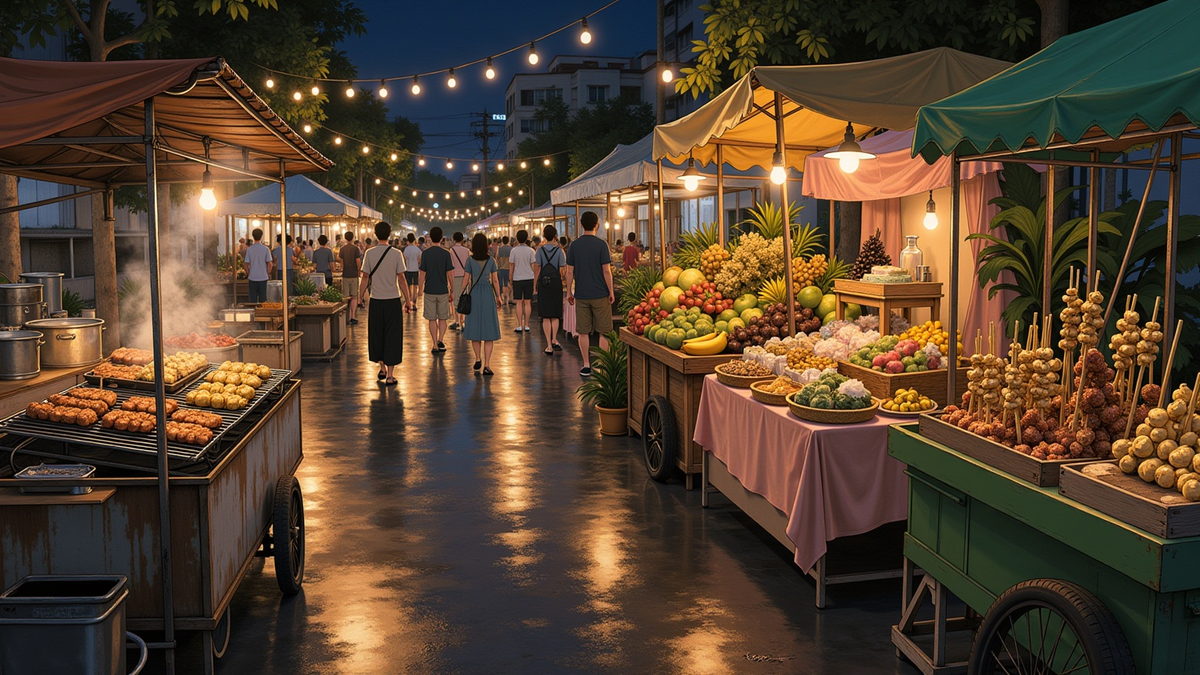
I came back to land at a night market, because in Bangkok you are never far from one, and by then I was calm enough to enjoy it properly. Steam and fairy lights, a hundred small kitchens under the open sky, the smell changing every four steps. You could map that market blindfolded — I half did: a lane of charcoal smoke and sizzling skewers, then a lane of sweetness where the pancake griddles are, then the sudden green smell of herbs being torn, then fish, then, faintly, the durian corner, which announces itself from a respectful distance and is escorted, by general agreement, to the market's far end. The wok fires jumped in the dark like small tame lightning, and the cooks worked in that offhand way that only comes from ten thousand evenings of the same beautiful motions. There were skewers of things I knew and loved, and there were, on one famous table, scorpions — arranged, glossy, entirely confident. The scorpion and I regarded one another for a moment, and we agreed, like gentlemen, to remain strangers. And at a dry-goods stall I found Rose's present. I have carried her home a correction, a colour, and a scent; from this journey she gets a taste. There is a dipping sugar here they sell for green mango — sugar, salt, and ground chilli in one pinch, sweet and salt and fire in a single spoonful — the whole argument of this country's cooking folded into a paper twist the size of a matchbox. The stallholder had three jars of it, mild to serious, and when I explained with my hands that it was for somebody careful, she chose the middle jar for me with the gravity of a pharmacist. She wrapped it as though it were jewellery. In a way I could not have explained to her, it was.
There was a fruit stall near my hotel that I had visited every morning by then, run by a woman of about my age with a knife older than both of us. She cut pineapple the way her part of the world does it — spiralling the skin off in one long ribbon, carving the eyes out in neat diagonal channels, ten seconds, no waste, a small daily masterpiece performed for the price of a bus ticket and never once watched by its performer, who was always already looking at the next thing. On my last morning I was early, and I saw what the street sees: before she opened, before anything, she put down a saucer of scraps by the wall for a street cat that was clearly expecting her, and stood guard over its breakfast while it ate. Then she opened. I bought my pineapple as usual and said nothing about the cat. Some accounts are not mine to audit. But I gave her my eleventh thank-you of that morning with particular sincerity.
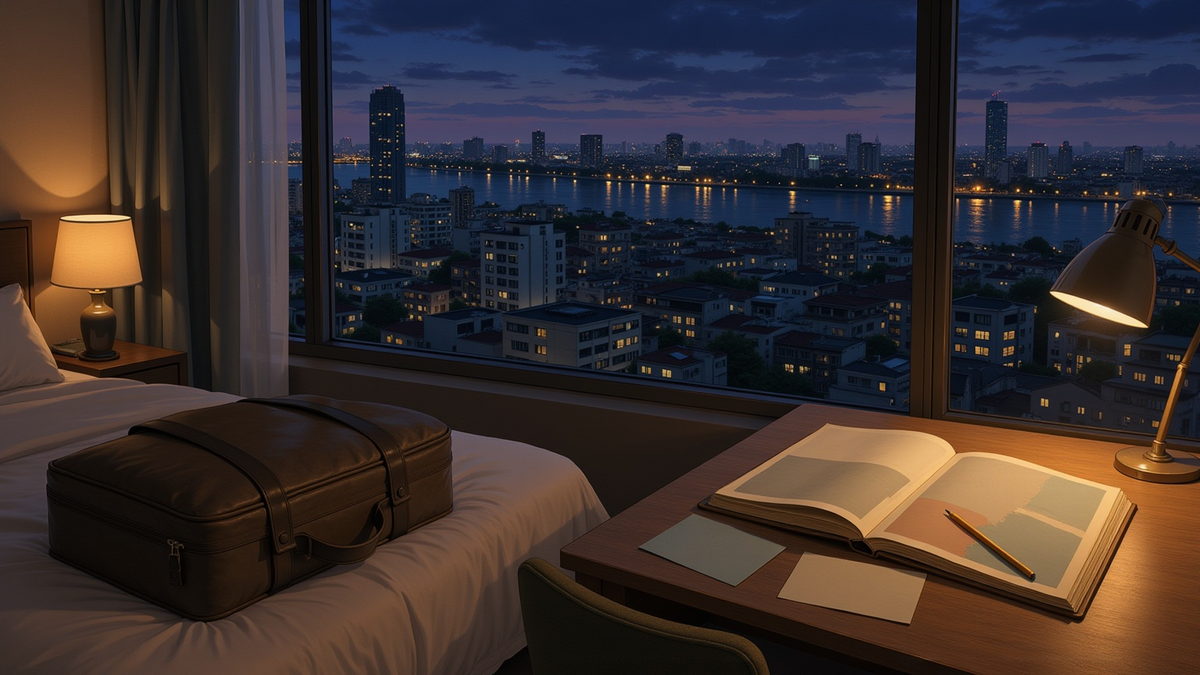
And now it is late, and the case is packed, and the paper twist of sugar rides in the corner where the precious things go, next to a postcard I began on a ferry and did not finish, because the temples were coming past faster than my sentences. It reads, so far: "Dear Rose. The temples here come down to the water like" — and there it stops, because the next one was already coming past, and I decided the sentence was truer unfinished. She will understand. After thirty years, she reads my silences as fluently as my letters. The other card, the finished one for Rose, went off days ago — on the back I told her the truth in the space allowed: that the city is two cities, one on top of the other; that I have eaten better this week than in the rest of my year; and that her present weighs nothing and will change her kitchen. The atlas came out on the bench by the pier tonight — one correction for each journey, that is the ritual — and this journey's took no deciding. I found the blue stroke of the river — the line I drew years ago, believing it — and I inked it a shade wider, because it had earned the space. It turned out to be the main street of the whole spinning city, the one street that moves, and my apology to Bangkok is a heavier line on a page the city will never see, which is how map-makers say sorry. Some places you learn by walking, and some, I have found, by returning. Bangkok taught me a third way. Some places you learn by changing floors — street, then sky, then water — and the last floor is the one that was there before the city, and will be there after, moving at the pace of a man rowing, holding all the lights at once.
Rest now, and let the day set itself down the way that city does it — floor by floor, the street first, then the high galleries going dark, then just the river. Tomorrow, before the light, the monks will walk Sukhumvit again with their bowls, and the doorways will open for them, and the city's gentlest hour will happen, as it always does, while everyone who needs it most is asleep. The stalls are cooling on Sukhumvit, stacked and wiped and chained for the night, and the last trains are sliding home along their ribbon with almost nobody in them. The malls are asleep behind their glass. Away down at the water the temples have their lamps on still, laying gold on the current, and the ferries are tied and nodding at their piers, and the river goes on doing the one thing it knows, patiently, in the dark — it was doing it before anyone drew it, and it minds the city so the city can stop. The heat has softened into something you could wear. The cat by the fruit stall is asleep with its account settled. Nothing in that whole vast stacked city needs a thing from you tonight, and nothing here does either. The river will carry it for you.
Goodnight from the upper floor, above the lit streets. Goodnight from the river that was here first. Goodnight from Henry.