Khao Sok, the Lake Above the Valley
Henry takes a week on a stretch of Thai coast the visitors never quite came back to, rides a scooter inland for the first time in forty years, and hires a boat of his own across a lake younger than the map in his pocket.
Chapters
- 00:00Welcome
- 01:41A room with a shutter, and a lizard on his rounds
- 02:10The empty beach, and the reason for it
- 03:32Evenings on the coast
- 04:40A week of very little
- 06:45A scooter, after forty years
- 07:50Inland: rubber trees and limestone towers
- 08:35A society on the cliff
- 09:45The temple, and the corn taken in one movement
- 10:42Across the dam
- 12:30The drowned valley
- 14:35A boat of his own
- 15:55Ribbons on the bow
- 16:40Out on the water
- 20:07The floating restaurant, and the fish beneath it
- 22:10The climb through the jungle
- 23:25The top, and trying to see a valley again
- 25:58Swimming at sunset
- 27:46Running east, into the evening
- 30:55Home in the dark, by torchlight
- 33:03A cafe on a farm, and an old colleague
- 36:36Packing, and one mark in the atlas
- 38:54Goodnight
The full story, in writing
The complete narration as it was recorded, about 6,202 words. Read it here, or listen to it on YouTube.
Tonight: the west coast of Thailand.
There is a shore on the far side of that country from Bangkok: the western sea, the one that runs down past Burma and out towards India. Follow it north from Phuket for an hour and a half and the resorts thin out. The road runs between rubber trees for a while. And then there is a long quiet beach with a village behind it, and the village is called Khao Lak. That is where I went when the city had given me all it could, and I did nothing there for a week, and I would do it again tomorrow.
I drew this coast a good many times without once standing on it: a line on a sheet, three fingers wide, with a scatter of islands off it that nobody ever asked me to name. I could draw it from memory even now. Drawing a coast, though, tells you nothing whatever about standing on it — about the particular green of the water there, which is not the green of anywhere else I have been, or about the heat that comes off the sand at four in the afternoon and goes on coming off it long after the sun has gone. I had a room with a fan and a wooden shutter that never quite closed, and in the mornings a lizard the length of my forearm came out of the scrub at the top of the beach and went along it at a stroll, in no hurry, checking on things — the way an old official walks the corridor of an office he retired from years ago and still likes to inspect. I got used to him. He never once got used to me.
The beach was almost empty, and it took me two or three days to notice how strange that was. It is a beautiful shore — sand the colour of pale straw, coves with rocks at either end, palms leaning out over the water the way they do in the pictures, and behind them low hills the deep green of a wet garden. There were perhaps eight of us on two miles of it. I asked, eventually, in the gentle way you ask a thing when you already half know the answer, and I was told what most people already know: that the great wave came here, more than twenty years ago now, and that this village had the worst of it, and that the visitors, afterwards, went elsewhere. The village rebuilt. The hotels reopened. The people who used to fill them simply never entirely came back. I will not say more about it than that, because it is not my story to tell. I will only say that the quiet I was enjoying so much had a reason, and that knowing the reason did not spoil the quiet — it made me hold it more carefully, the way you hold anything that somebody else paid for.
The nights there deserve a paragraph of their own. The heat lets go of the sand about an hour after dark, and the air arrives at exactly the temperature of your own skin, so that you stop being able to feel where you end — a stranger sensation than I can make it sound, and a very restful one. I took to walking the beach at nine or ten with my shoes in my hand. There is phosphorescence in that water some nights: you scuff a foot through the shallows and a few small green sparks go with it and then think better of it. And behind everything, from the trees at the top of the beach, the geckos calling — a hard little chuck-chuck-chuck that starts up, runs its course, and stops, and then starts again somewhere else, all night, everywhere in that country. By the third night I had stopped hearing it as noise. By the last night I was going to miss it, and I do.
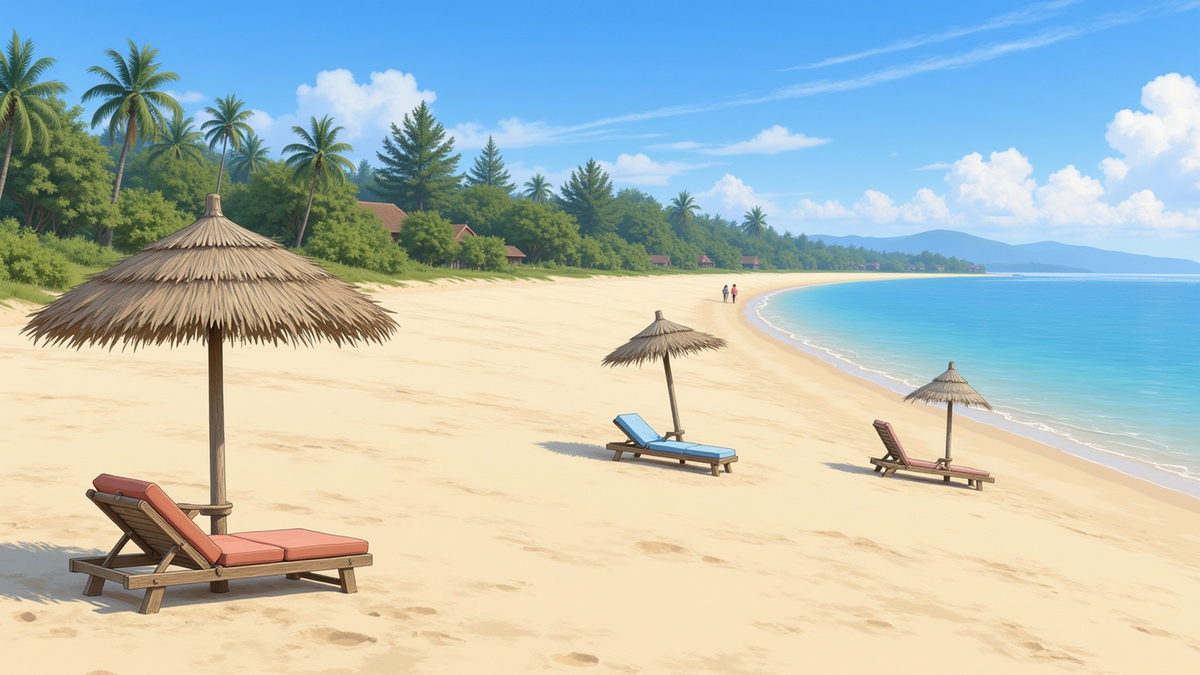
So: a week of very little. I swam before breakfast when the sea was flat as a dish. I ate at a place with plastic chairs and a corrugated roof where a woman cooked over one gas ring and produced, from that one ring, food I still think about — hot and sour and sweet at once, for less than the price of a sandwich at an airport. I learned to say thank you properly at last; in Bangkok I had counted my thank-yous like a man learning a card trick, and by that week they came out on their own, which is the moment a phrase stops being foreign. There is a single street of shops behind the beach, and I walked it every evening: T-shirts, sunglasses, a man mending an outboard motor on a mat, a shop selling nothing but hats. I bought nothing for three days and then bought a hat, obviously.
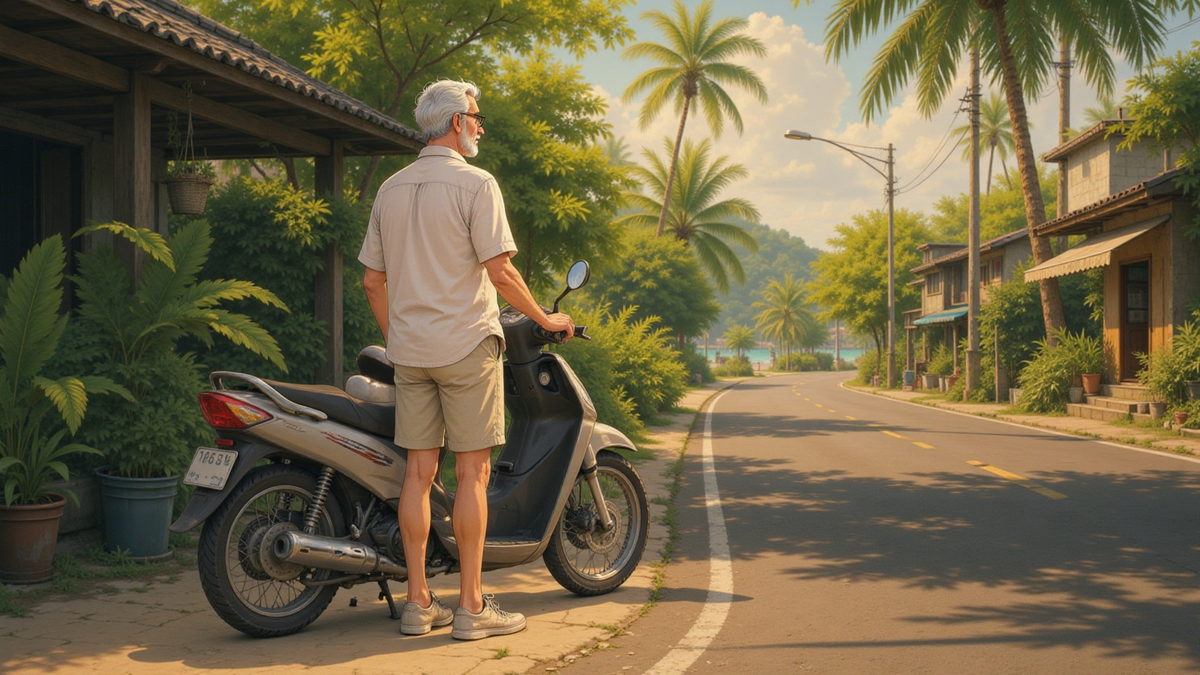
Now. There was a lake I wanted to see, up in the hills inland — Cheow Lan, in the Khao Sok national park — and no bus that went there, and I am too old to enjoy haggling with a driver, and so I did a thing which I want to tell you about properly because it surprised me more than anything else on that whole journey. I rented a scooter. A small one, red, with a scratched seat and a basket on the front, from a man who asked me one question — could I ride — and accepted my answer without any of the paperwork I would have insisted on at his age. And I could ride, as it happens. I have not sat on one since I was seventeen years old, when I had a little motorbike with an engine you could have carried under one arm, and I rode it to the drawing office in all weathers for two summers, and then a car happened, and then a career happened, and I never thought about it again.
Forty years. And the astonishing thing — the thing I sat at the side of the road afterwards and turned over for a while — is that the feeling was not remembered. It was returned, whole, exactly as it had been. Warm air pushing up the sleeves of my shirt. The road doing my thinking for me. That particular happiness of going somewhere at your own pace with nothing between you and the country you are going through. I had assumed, without ever putting it into words, that a pleasure like that has a shelf life — that it belongs to the boy who had it and does not transfer. It transfers. Nobody tells you that. They tell you what you lose. I went inland with the wind coming up my sleeves and a map in my shirt pocket that I did not once take out, and if I am honest with you, I made the journey longer than it needed to be.
The road climbed into rubber country — plantations in ruled rows, each tree with its diagonal cut and its little cup, the whole hillside quietly bleeding into ten thousand cups and nobody about — and then into limestone, which is what this part of the world is made of. Great grey towers of it, standing straight up out of the flat, wearing jungle on every ledge that will hold soil. Wherever a rock is not vertical, something green is growing on it. About halfway I stopped at a temple, because there were monkeys on the wall and I am not made of stone.
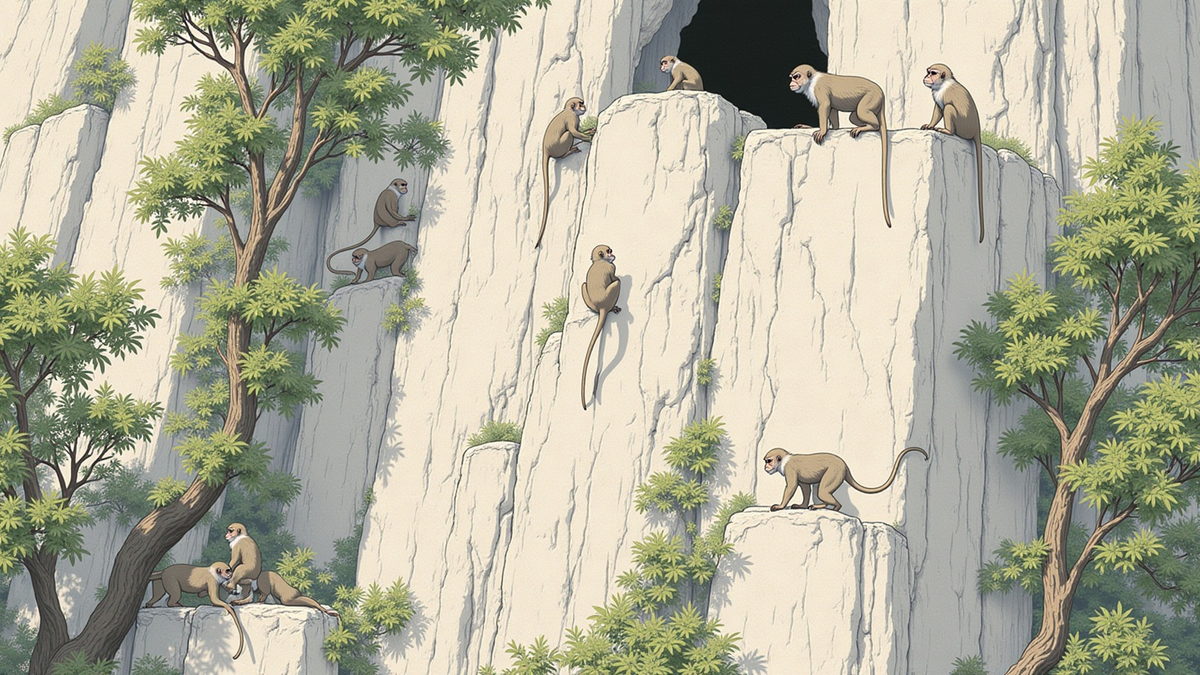
I had expected a few. What is actually there is a society. The cliff behind that temple goes up two hundred feet, grey limestone with trees growing straight out of the face of it — real trees, leaning off ledges no wider than a shelf, roots down the rock like veins — and the whole wall is occupied. Long-tailed macaques, dozens of them, on every level: big pale ones sitting up on the high slabs with their tails hanging down a yard behind them, half-grown ones going up the vertical parts at a speed that makes no sense, and down at the bottom the mothers, sitting in the shade with infants in the crook of an arm, doing exactly what a mother on a park bench does, which is watch everything and appear to watch nothing. They are not tame and they are not wild. They are something I have no word for: entirely used to us, entirely uninterested in us, and completely aware of what is in your hands.
You buy a paper twist of corn at a stall by the gate, and they know precisely what the transaction is. One of them relieved me of the whole twist in a single movement — up, taken, gone, back on his ledge before my arm knew — which the woman at the stall found funnier than I did, though not by much. Behind the temple there is a cave, and in the cave a Buddha lies on his side, longer than a bus, with his head propped on one hand, in the attitude of a man listening politely to a story he has heard before. It is cool in there and smells of stone and old incense. Outside, the argument over my corn was still going on. Inside, nothing had needed to happen for a very long time.
After the temple the road empties out. There were long stretches with nothing on them at all but the trees closing in from both sides and the heat lying on the tarmac in sheets, and then, without warning, a village: forty yards of shopfronts open to the road, a dog asleep in the middle of the lane with the confidence of a dog who has never once been hurried, a woman ironing under an awning, three men round the open bonnet of a pickup conducting the international ceremony of looking at an engine. And then trees again, for miles. I stopped twice for no reason. Once because a bird I could not name went across the road ahead of me, low and unhurried, with a tail longer than the rest of it. And once at a wooden shelter with a bench, where an old woman sold me a small banana and cold water from a cool-box, and where I sat a quarter of an hour saying nothing to anybody, being nowhere in particular in a country I had drawn a hundred times and never stood in. There are people who would call that a wasted quarter of an hour. I am fairly sure it was the best fifteen minutes of the week.
Then the dam. You come round a shoulder of hill and there it is, a great sloped wall of packed rock holding back something you cannot yet see, and a road running along the top of it, and I rode across that road at about the pace of a walking man because on one side there was a drop into a green valley and on the other there was the lake.
And here I must tell you what that lake is, because it is the reason a map-maker goes there. It is not an old lake. It is not a lake at all, in the sense your childhood atlas means the word. Some fifty years ago there was a valley in these hills, with a river down the middle of it, and villages, and forest, and hills standing up out of the forest. Then they built that wall, and the river stopped, and the water rose for years, and it drowned all of it — the river, the fields, the trees, the lower slopes of every hill. What is left above the surface are the tops. The hills became islands. The cliffs that had stood over a valley now stand out of open water, straight up, three hundred feet of grey rock with jungle on their heads, and between them the water goes back and back into channels and bays that nobody had names for, because fifty years ago they were the air above a forest. And it is not a small piece of water. A boat crossing from one end of it to the other, without stopping, takes something like six hours; the arms and bays going off on both sides would take you weeks. There is no town on it, no road to most of it, and — I did not appreciate what this would come to mean until much later that night — no lights anywhere at all, because the whole of it is national park and nothing is built. I stood on that dam with the atlas in my hand — the same atlas I have been correcting all my working life — and understood that I was looking at water younger than my own book. Everything I have ever drawn was older than my drawing of it. Here, for once, the world had been made after the paper.
There is a pier below the Ratchaprapha dam where the boats go from, and this is where I made my one extravagance, and I recommend it to you without reservation. You can go on the lake cheaply, with fifteen other people, in a boat that leaves at ten and comes back at three, and you will see it, and it is beautiful, and you will have seen it. Or you can hire a boat of your own. I hired a boat of my own. It cost me what a decent dinner costs at home, and it bought me the only thing out there that money can actually buy, which is the right to stop. They are extraordinary craft, these — long and narrow, the bow rising up in a curve like something off a Viking ship, and at the stern a car engine, a genuine car engine, bolted to a frame and swivelling on a pole with the propeller out on the end of a long shaft. The man who owned mine started it with a pull, and it made a noise like a shed falling over, and then we were out of the shadow of the dam and onto the open water and I stopped minding the noise within a minute.
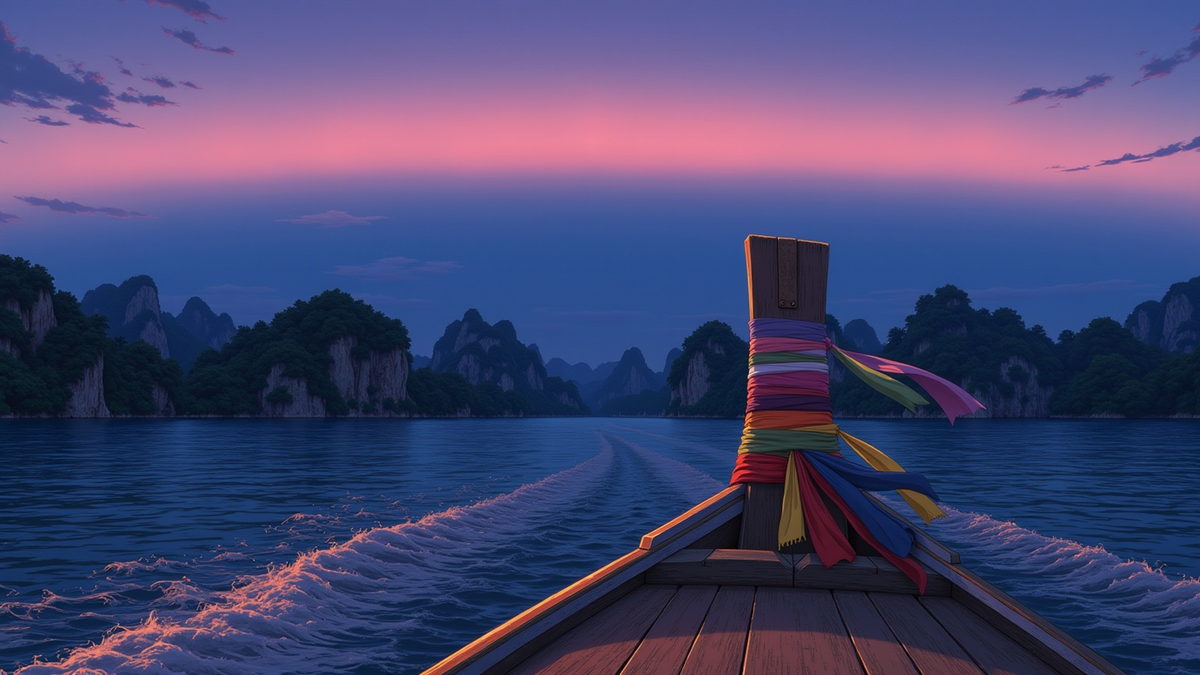
Around the bow of his boat somebody had tied ribbons — bright silk, red and gold, a little faded and a little frayed by the wind — and a small garland of flowers, quite fresh. I asked about them. He said something about safety, and a spirit, and made a small gesture towards the water that meant more than his English did. Every working boat on that lake wears them. I have spent my life in a trade that puts its faith in instruments, and I would like to record that on a lake with no marks on it, in a boat with no compass, the flowers were doing no harm at all.
Now, what is it like out there. It is quiet, first of all — the engine notwithstanding, because your ears file that away and stop reporting it. There is nothing built. Not a house, not a wire, not a sign advertising anything to anybody. The cliffs come down into the lake without a beach, straight in, so the water goes right up to the rock and the rock goes straight up out of the water, and the trees start immediately and go all the way to the top. And the shapes of them — I do not have the words a geologist would have. They lean. They overhang. Some carry a single tree on the summit, dead centre, as though planted for a joke. Where two stand close the boat goes between, and the water narrows and goes still and dark green in the shadow, and the engine comes back off both walls at once, and then you are through, and there is another mile of open water beyond. It goes on like that for a very long way. By the end of the day we had been out on that water for the best part of eight hours, and I could not tell you what fraction of the lake we had seen. Not most of it.
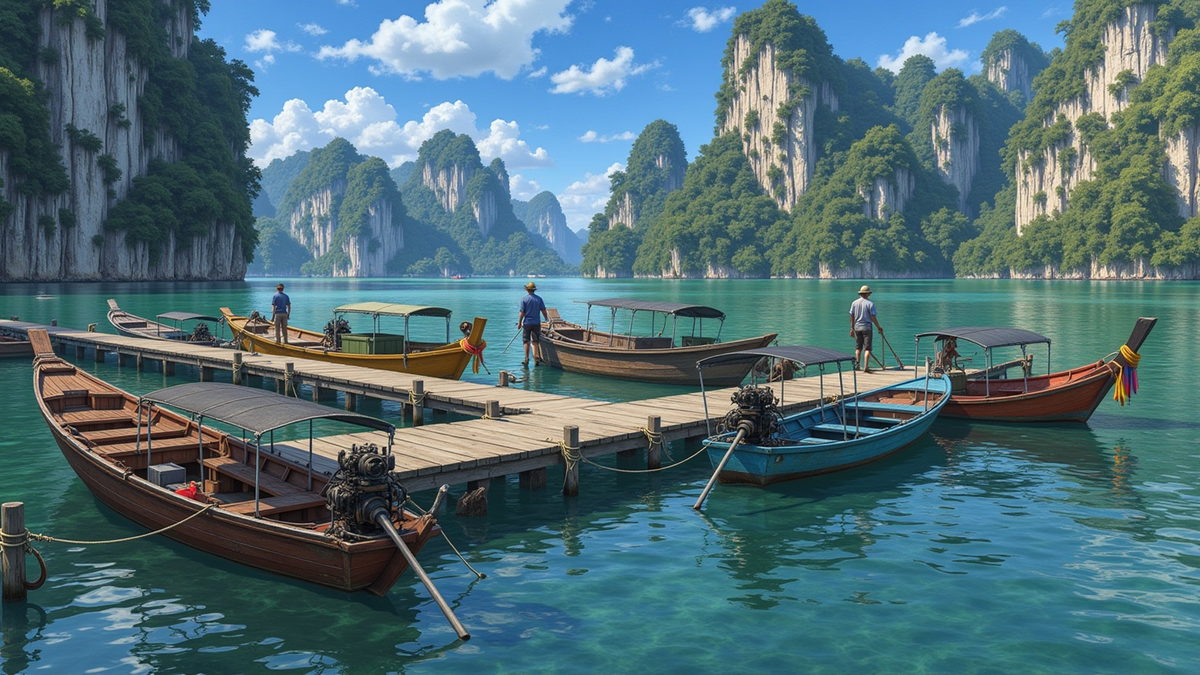
Twice we went into bays that had no reason to exist — arms of water running back between two walls until the walls closed and there was nowhere further to go, and my boatman cut the engine, and the silence came in behind us like water filling a jug. That is the thing you cannot buy on the ten o'clock boat: the engine off. What you hear then is a small slap of water on the hull, and the drip off the pole at the stern, and, up on the rock faces, birds — invisible ones, high up in the green, calling across the gap with those long liquid notes that always sound like a question being asked twice. Somewhere further in, something bigger moved through the canopy and set a branch swinging; neither of us saw it, and he shrugged, and I decided to believe it was a monkey. We sat there a good while and did not speak, because nothing wanted saying and there was no language to say it in. The cliff went up in front of us with ferns growing out of it sideways, and little dark openings here and there in the rock where caves start, and the water underneath us was the deep still green of a bottle.
I asked him — with my hands, mostly — how deep it was there, and he held his palm flat and moved it downwards several times, in a way that meant: a very long way, and I have never particularly wondered. Underneath that boat there was a hillside with a shape to it, and a path along it probably, and the corner of somebody's field: a whole country's worth of detail still down there in the dark, holding its shape, no longer of use to anybody. It did not feel sad, out there in the sun. It felt like the world getting on with things.
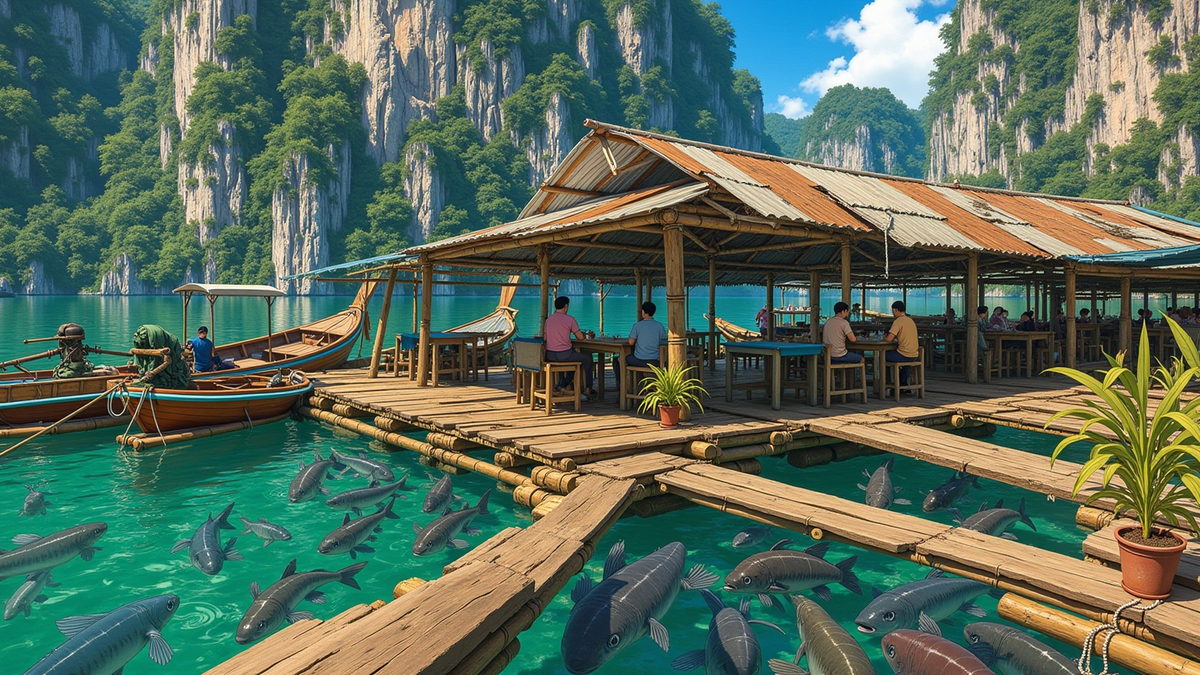
In the middle of the day we tied up at a floating restaurant — a raft of planks and bamboo with a roof and eight tables, moored in a bay under a cliff, rising and falling half an inch with every wake — and I ate fish that had been in the lake that morning. Underneath the planks, in the shade of the raft, there were fish of another kind: hundreds of them, thick brown-gold backs, all facing the same way and waiting, in the way of animals who have learned exactly what a restaurant is for. You buy a bag of bread for the price of nothing. The water boils. It is undignified for everybody concerned and I did it twice. My boatman had carried his own lunch, and he ate it standing by the boat, as I suppose he always does, and it took me two attempts to get him to sit down at the table with me. We had no language between us worth the name. We got on very well.
There are huts out there, too, and they are the reason I have been looking at aeroplane prices again. They float — rafts of bamboo with a little wooden room on top, painted green or blue, moored in rows along the foot of a cliff in the quieter bays, each with a square of veranda and a ladder going down into the water. You can lie in bed in one of those and hear the lake moving under the floor all night, with no road to you and nothing to do after dark but watch the cliffs stop being visible. I did not stay. I had a room on the coast and a plan, and plans are how a sensible man cheats himself out of things. If I go back — and I have caught myself saying when rather than if — I will stay a night out there and tell nobody where I have gone.
Then we ran across to the far side, where a path goes up. This is the one piece of the day that has to be earned. It is an hour and a half of climbing, and I use the word climbing rather than walking deliberately: the path goes up at the angle of a ladder in places, over roots polished by ten thousand hands, and where the roots run out there are vines to haul on, and where the vines run out there is mud. My guide went ahead of me in a pair of rubber flip-flops, which I have decided not to think about, and he carried a stick, and every so often he beat the stick against a tree trunk — knock, knock — for the snakes. Not to frighten them off, he explained: to tell them we were coming, so that they could go somewhere else without embarrassment on either side. About two-thirds of the way up a group came down past us, young and muddy to the elbow and extremely pleased with themselves, and I stood off the path on a bad step to let them by, which is how I got my own mud, and I have never regretted mud less.
The top is a bare shoulder of rock with a drop on three sides and it is worth every one of those ninety minutes. The lake lies underneath you in the shape of a hand with too many fingers, going away in all directions between the towers, silver where the sun is on it and black where the cliffs lean over it. You can see how it was a valley. You can see the ridge lines running down into the water and simply carrying on underneath. And there is not one building, one road, one field, one wire, from the horizon on your left to the horizon on your right. I have looked at a great deal of country in my life, most of it from a chair, and I had never once seen a view with nothing of ours in it. My guide, who does this several times a week, sat with his back to all of it and drank his water and let me have the view to myself, which was courteous of him. I gave him what was left of mine at the top, since he had finished his and would not have said so.
I stayed up there longer than I had any business staying, and I will tell you what I was doing. I was trying to see it as a valley. You take the water away in your head, drop the surface three hundred feet, put the trees back down the slopes and the river along the bottom where the deepest channel must run — and for a second or two it comes: steep-sided, the evening light coming down it lengthways, a village at the elbow of the river with fifty roofs and a school. Then a bird crosses, or the wind moves the water, and it is a lake again, and you start over. I have drawn valleys all my life. That was the first one I ever had to imagine, and the only one I have been sorry to lose.
Coming down took half the time and twice the concentration, and by the time we reached the boat again the light had gone long and gold across the water and the day had begun, at last, to let go of its heat. And that is when I swam, which turns out to be the whole trick of the thing, and I had arrived at it by accident.
You go off the side of the boat into fresh water in the middle of nowhere, and it is warm on the top and cold underneath where your feet are, and when you turn over on your back the cliffs are on all four sides of you, going up and up, with jungle on their tops and the sky above that. And at that hour all of it is going gold. The rock faces come up out of the water the colour of a struck match, and the green on top of them turns almost black against a sky doing three colours at once, and the water you are lying in takes the whole business and holds a soft copy of it an arm's length from your face. And the scale of it — this is the thing that only happens at water level, and it is the reason to be in the lake rather than on it. From the boat, those cliffs are scenery. From flat on your back in the water with your ears under, they are enormous. They go up and up and do not stop, and you understand for the first time that you are floating in the top thirty feet of a valley three hundred feet deep, with a country underneath you and the sky a very long way up. There is nothing to swim to. There is nowhere to be. I floated and thought about very little, and with my ears under the water even the birds went quiet, and the light on my face kept changing colour. A man well past his working years, bobbing about in a drowned valley at sunset, entirely happy. I recommend it above everything else I did in that country.
The sun was still well up when we turned for home, because out there a sunset is not a moment but a long slow piece of work — the better part of an hour of it, colour arriving over the whole sky at once, the cliffs going from bronze to violet, the lake underneath copying every bit of it half a second later so that you travel through the middle of two skies. And here is the arrangement that I did not plan and could not improve on. The pier lies at the eastern end of that water and the sun goes down in the west, so a boat coming home in the evening is running away from the light. Behind us the whole west was burning — the towers we had come through standing black against it, the water between them on fire. And then I turned round to face the way we were going, and found that the better half of it was in front of me. This is a thing I have known as a fact for forty years and had never once properly watched. When the sun goes down behind you, the shadow of the earth itself comes up in the opposite sky: a broad soft band of blue-grey rising off the eastern horizon, with a strip of rose and apricot lying along the top of it that seems to be lit from underneath. It climbs as you watch. It is enormous, and completely silent, and most people are facing the other way. So we ran east into that — pink light over the bow, the cliffs ahead going lilac and losing their edges, the water taking the colour and softening it — with all the fire behind my shoulder. Sunset astern, and the night arriving in front, dressed better than the sunset. I sat sideways so that I could keep turning my head, and I was still turning it twenty minutes later.
I will admit something about that hour. I did not want it to end, and I did not want to leave, and the wanting was surprisingly sharp for a man who had been perfectly content for a week and expected to go home unruffled. There is a particular sadness in going away from a place like that — not the ordinary end-of-holiday business, but the specific knowledge that the water will do this every single evening whether or not anybody is on it, and that tomorrow evening the gold will come down those cliffs exactly as it did tonight, and I will be at an airport. I have felt it before, in Provence, at the end of a month. It does not get easier with practice. I have decided that it is the correct response and not a fault, and that a man who could leave that place unmoved would have been wasting the boat.
We came home in the dark, and that is the thing I most want to describe to you. There are no lights out there. No buoys, no markers, no channel, and on that boat no compass, no radar, and nothing resembling a screen. There is a man at the back with his hand on a pole, and there is a torch. He held it in his left hand, and every so often he swung the beam up and forward — a slow sweep across the water ahead, once, twice — and out of the black somewhere off to our right another beam answered him, swinging the same way, and the two boats passed each other with maybe fifteen yards between them at a speed that would have been brisk in daylight. Then that one was gone and it was black again. Then another, far off, a little firefly of a thing sweeping the water, and ours answering, and the pass. That is the whole system. A light means: here I am, and I am coming through. It is older than every instrument I ever trusted, it costs the price of a torch, and out on that lake at eight o'clock at night, between cliffs you can feel but cannot see, it works perfectly. And the stars out there are not the stars you get at home. Nothing is built for a very long way in any direction and nobody is burning a light, so the sky comes all the way down to the tops of the cliffs and keeps going — thick with them, more stars than sky in places — and the lake underneath holds a shaky copy of the whole arrangement. I sat in the bow with the warm air going past and all of that overhead, and I thought: I have spent my life making things that tell people where they are. Here is a man doing it with one hand and a flashlight, and doing it better.
The next day I did nothing at all, and the day after that I went to lunch with Malcolm Fenn. Malcolm and I drew coastlines side by side for eleven years, in a room with north-facing windows and a radiator that clanked, and when he retired he did the thing everybody at the office said they would do and nobody ever does: he went. Sold the house, came out here, and stayed. We had exchanged Christmas cards for a decade. He heard I was in the country and named a place ten minutes from the dam.
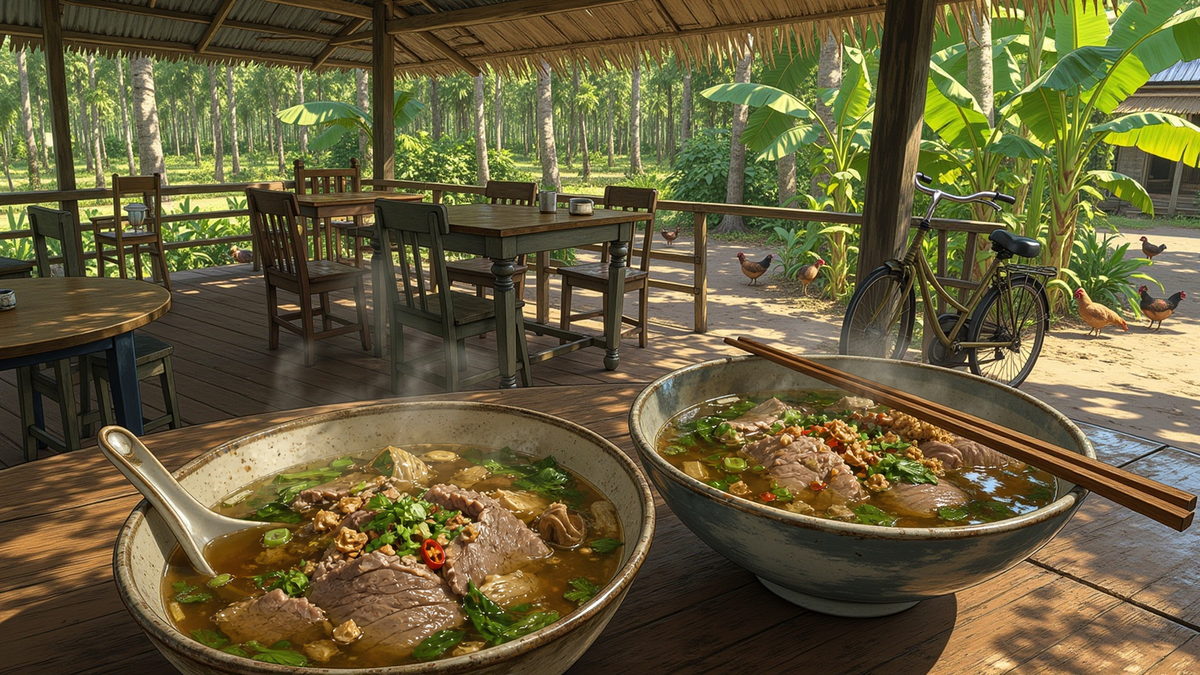
It is a café on a farm, up a track, with a view over a field towards the hills, half a dozen tables, and no reason on earth to be as good as it is. I will not describe the food dish by dish, because a description of food is a poor substitute for food and because it is late. I will say only this: I have eaten well in my life, in places with tablecloths and opinions, and what came out of that kitchen was better than nearly all of it. Every single thing. The vegetable I could not identify. The bowl of broth that arrived last and, I believe, rearranged my views. We came back the following day to check whether we had imagined it, ordered entirely different things, and had to admit that we had not. Malcolm has the tan of a man who has stopped going indoors and he told me he does not miss the drawing office, and then talked about it for forty minutes without stopping, which is how I knew he did. We may be the last two men alive who remember cutting map lines by hand with a scribing pen. He said that somebody ought to write it all down; I said somebody probably has; we both let it go and ordered more of the broth.
And now it is late, and the case is packed, and on top of the folded shirts is a small bundle of bamboo tubes on a string — a wind chime from the shelf by the café's till, chosen after a long and slightly foolish deliberation between three of them, because Rose is getting a sound this time. She has had a correction, and a colour, and a scent, and a taste from me over the years; this one hangs by the kitchen window and makes the noise a boat makes at a mooring, hollow and wooden and unhurried, and every time the back door opens she will get a second of a lake she has never seen. The postcard went off from the village yesterday: the beach on the front, and on the back the only three things that would fit — that the water inland is younger than the book in my pocket, that I rode a motorbike again after forty years and have thought about nothing else since, and that I have found Malcolm, who is brown as a nut and perfectly happy. The other card is tucked in the book at page one hundred and six, begun on a boat and abandoned at the fourth word, because the cliffs were coming past and the sentence could wait. Some cards are for sending and some are for carrying.
There is a pencil in the spine of that atlas and a habit that goes with it: every journey earns the book one correction, and tonight the balcony did for a desk. Page one hundred and six shows this country's south, and it shows those hills, and it shows a river running down through them the way the surveyor found it, which was correct when the atlas was printed and has not been correct since about the year I qualified. So I did something I have never done in my working life. I drew a lake where there had been no lake — a long shape with far too many arms, over the top of the river, over the top of two villages that are under it now — and I put a small firm line across the valley mouth where the wall is. The book is wrong on that page and will stay wrong; the pencil is only me, disagreeing quietly with a piece of paper. But it is the first time I have ever corrected an atlas for a place that was right when they printed it and was later moved. The world does that occasionally. It is good for a map-maker to be reminded that his subject is alive.
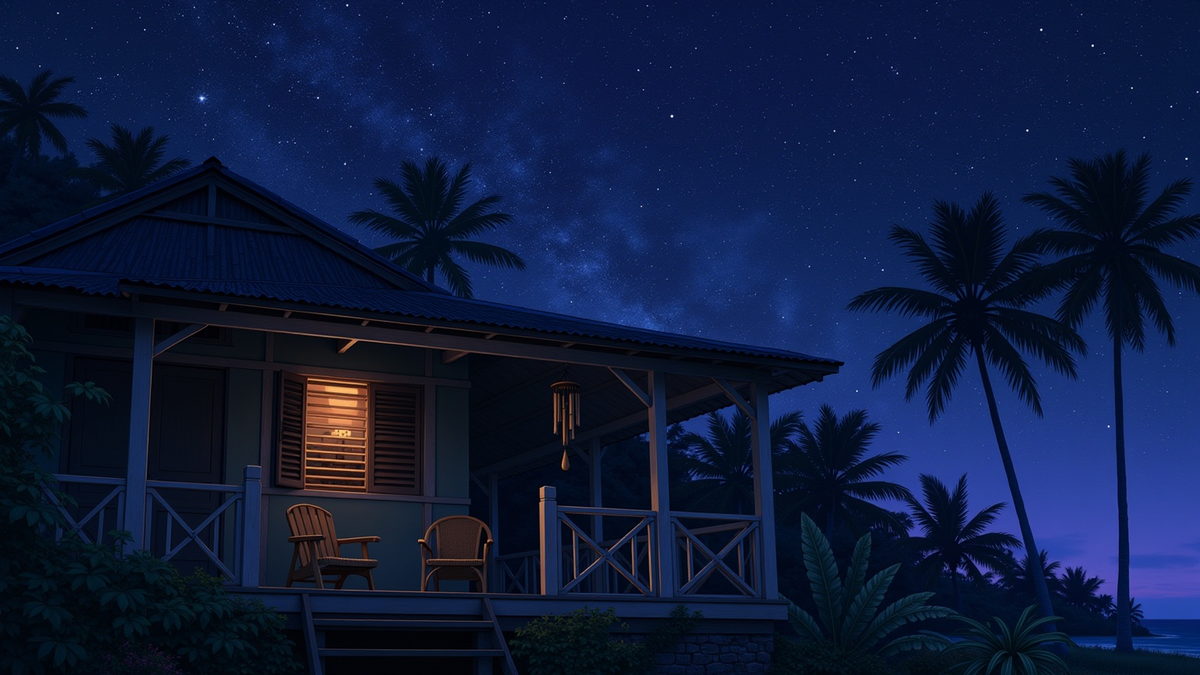
One more thing before the light goes. A map is a promise about a place: this is where it is, this is what is there, and it will be there when you arrive. Nearly always the promise holds, and that is why a man can give a working life to a drawing board and feel he has been useful. But every so often the world takes something back and hands you a different thing instead: a valley for a lake, fifty roofs for three hundred feet of green water with fish under it. And the discovery of this week is that the new thing was not a loss. I would not trade that water back for the valley — and it is not my valley to trade. A map-maker spends his life trying to hold a place still. The places were never especially interested in being held.
Rest now, and let it all go on without you, the way it did before you arrived and will after you leave. The lake will keep its own hours. The long-tail boats are tied at the pier with their ribbons hanging still, and the water is black and warm and going nowhere, and the cliffs are standing over it in the dark exactly as they stood over a valley when there was a valley. The fish are under the floating restaurant with the planks creaking above them. The forest on the tops is doing its night business, the small things calling to each other across the water and getting their answers. Away on the coast the sea is coming in over the flat sand as it does twice a day whether anyone watches or not, and the lizard is asleep somewhere in the scrub with his ledger closed. My scooter is chained up outside a shop with its scratched seat cooling. And somewhere between here and there a man is standing at the back of a boat with his hand on a pole, swinging a torch across the dark water once, twice, telling the night politely that he is coming through — and out of the black, a long way off, another light swings back to say that it has heard him. You do not need to steer anything tonight, because somebody out there is watching the water, and the day may go quietly without you.
Goodnight from the quiet coast. Goodnight from the lake above the valley. Goodnight from Henry.