Les Baux and the Camargue
Henry takes a village too small for its name, a quarry where paintings are thrown across the rock, and three days that end on the same bench each evening, before the salt pans turn pink and the flamingos come.
Chapters
- 00:00Welcome: what this channel is
- 01:31A village too small for its name
- 02:17The bench, the first evening
- 02:58The one bar in the village
- 03:38Les Baux on its hill
- 03:54Streets of stone, a wrong turning
- 05:06A cliff with a doorway
- 05:59The exhibition of light
- 07:31The bare quarry
- 08:38The shop, and Rose's perfume
- 10:23The bench, second evening
- 11:22The sunflowers
- 12:21Into the Camargue
- 13:55The pink salt pans
- 17:13The flamingos
- 21:01Dusk on the lagoon
- 22:37The bench, third evening
- 24:48Packing, and goodnight
The full story, in writing
The complete narration as it was recorded, about 3,997 words. Read it here, or listen to it on YouTube.
Tonight: a small village in the south of France.
When my month inside Avignon's walls was done, I did not go far. An hour south, a little less — the atlas had promised me more of the south, and I had promised to take it slowly. The road went out through the vines and then through orchards, and then it stopped bothering with towns altogether, and by the middle of the afternoon I was carrying my bag up a street with grass growing down the middle of it, in a village so small that the road that brings you in is also the road that takes you out. I will not be telling you its name. Partly this is kindness — a place that quiet has earned its privacy — and partly, I confess, it is because the village is not on my atlas at all. Too few roofs. Too little ink to spare, some colleague of mine decided once, and I am three days from understanding how wrong he was.
I had taken rooms above a courtyard, from a woman who handed me the key and pointed out, in the order she considered important, the bakery, the church, and the bench. She was right about the order. The bakery matters in the morning, and the church bell matters at noon, but the bench is the throne of the whole arrangement, and it sits in the little square at the village's one corner, against a wall that has been warm since June, under an iron lantern, beside a fountain the size of a washbasin. The fountain runs all night. Nobody turns it off, because nobody has ever turned it off. That first evening I sat there with my elbows on my knees and did absolutely nothing, and the village came past in ones and twos and nodded at me, and the swallows went up over the roofline, and when the lantern came on above me — it comes on with a click, like a thought being had — I understood that my three days here already had a shape. Wherever I went, whatever I saw, the day would end on this bench. The fountain talked the whole time. Water is like that; it keeps a conversation going so nobody else has to.
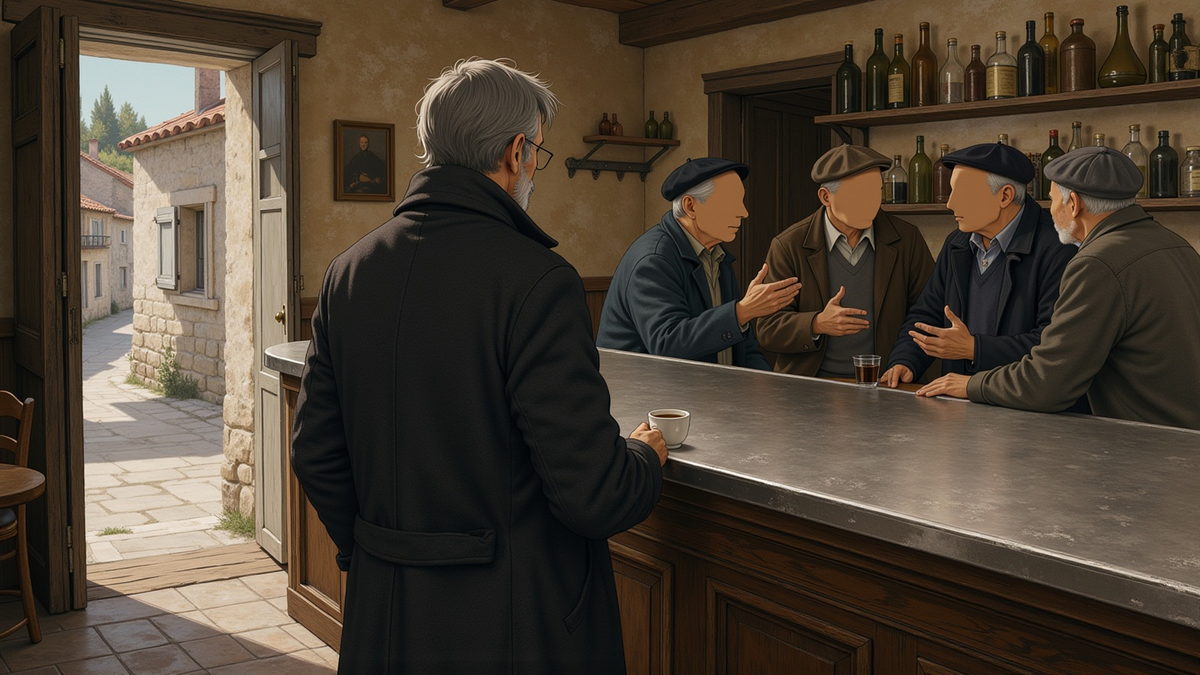
I slept with the window open and the shutters half closed, and the village made no sound I could report to you, and I woke to the smell of bread doing its work two streets away. The first morning anywhere belongs to an ordinary bar, and the village has exactly one, which on that morning held four men arguing gently about nothing at all — the argument was old, and comfortable, and I believe all four of them were on the same side of it. I drank my coffee standing at the counter, and said merci twice, and out I went into the day of stone.
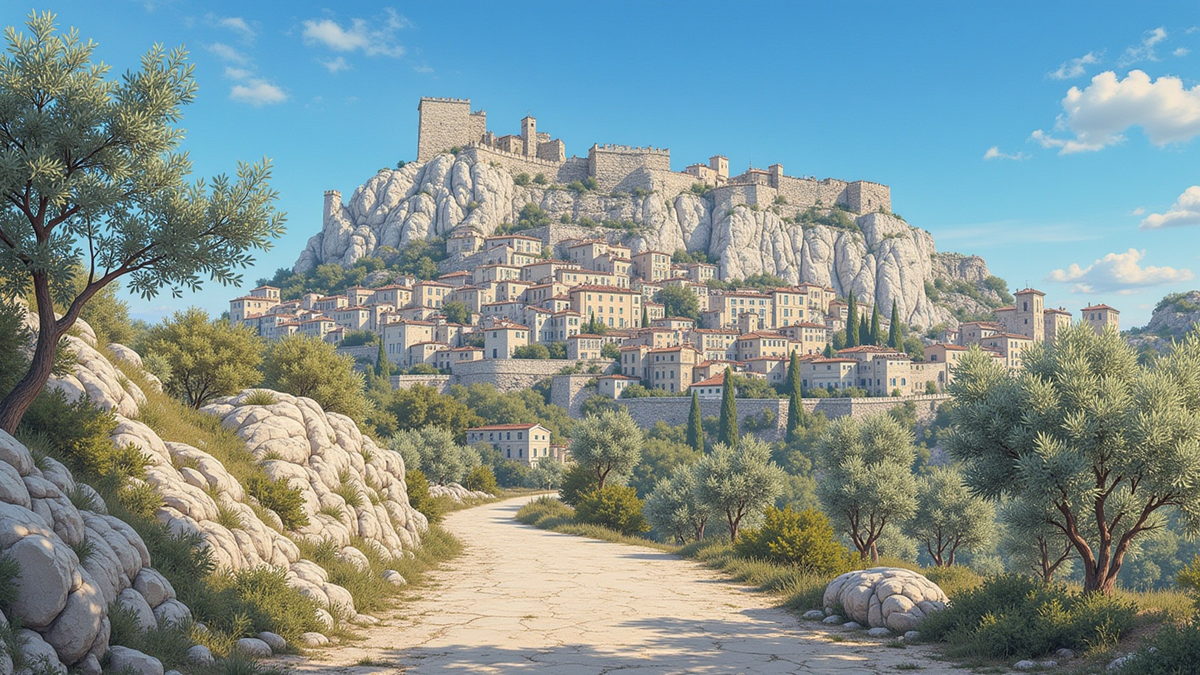
Les Baux sits on its hill a little way from the village, and you see it long before you arrive, because the town and the hill are made of the same white rock and it is hard to say where the one gives up and the other begins. Up close it is streets of stone, stone underfoot and stone overhead, houses cut into the hill and the hill cut into houses, everything that pale, honest white that this part of the south is built from. Few shops. Fewer tourists than the postcards led me to expect. What there is, is charm — and I use the word carefully, because charm in my experience is usually something a town does on purpose, and this was not. This was just a town that had been beautiful so long it had stopped noticing. I walked it slowly, the way you read a page you like, and somewhere between one white lane and the next — they are all sisters, those lanes, and they do not introduce themselves — I took a wrong turning, and the wrong turning went downhill, out of the town, along the flank of the hill itself. I have made a life's habit of trusting a confident-looking road, and this one led me to a cliff with a doorway in it.
A quarry. An old one — men had been cutting building stone out of this hill for centuries, and where they had cut, they had left rooms. I do not mean rooms as a figure of speech. I mean rooms: walls fifteen metres high, square-cornered, cool as a cellar, cut into the yellow sandy stone with a neatness my old profession can only respect. And some years ago somebody looked into that dark and had an idea, and now, inside the hill, they hold an exhibition of light. You buy a ticket at a cliff face. You walk out of the Provençal noon into the cold smell of stone. And then the dark opens, and the paintings come to meet you.
They were showing the painters of this country's light that year — Cézanne, who spent his life a little east of here painting one mountain over and over until the mountain gave in, and after him Kandinsky, whose paintings are made of colour let off the leash entirely. The pictures were everywhere at once: across the floor, up the walls, over the ceiling, sliding and breathing and folding into one another with the music, so that you did not so much look at the paintings as stand in their weather. An orchard in blossom came up under my shoes. A yellow the exact temperature of July climbed a wall twelve metres over my head. I stood there the better part of an hour, and I can tell you the strangest part of it: in a room where everything moved, the thing you end up watching is the stillness. One old man near me had taken his hat off in the dark and stood holding it against his chest, the way men of his generation do in church. He did not move the whole show through. When it ended and began again, I stayed for the second turning, because leaving would have meant walking through the middle of whatever he was having, and some things a stranger should walk around. I never saw his face. I hope the paintings knew what they were doing.
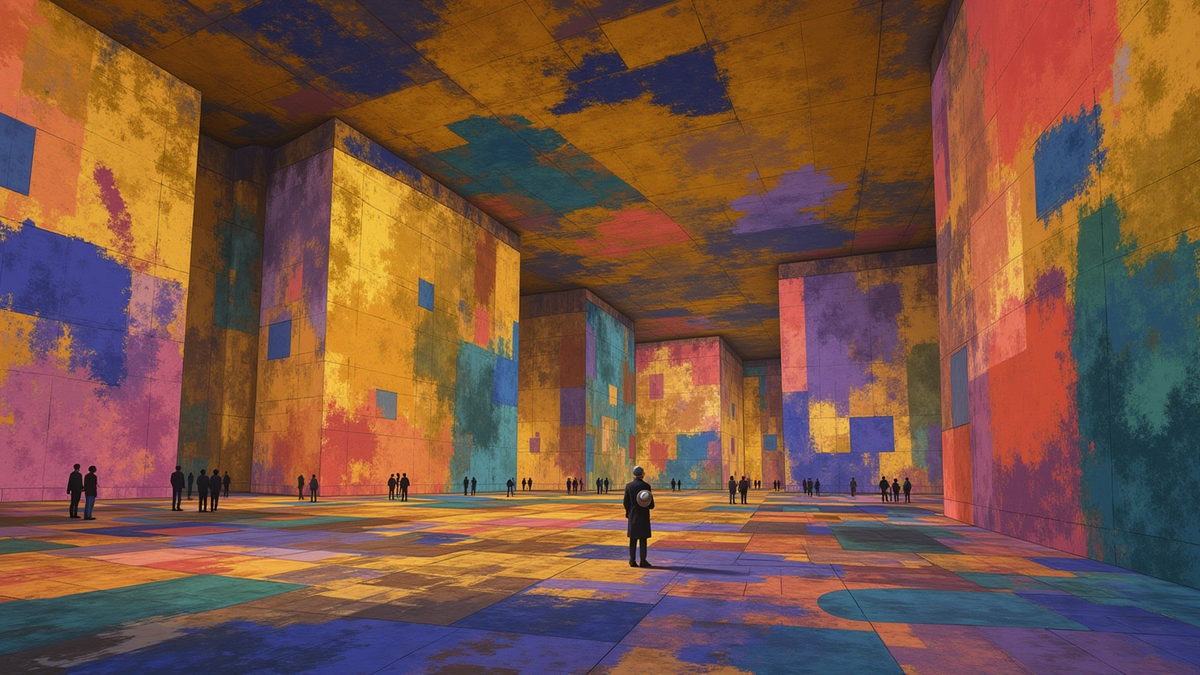
And then the lights came up, a little, and the show rested, and the quarry was just the quarry: bare cut stone, high and square and quiet, holding its cool the way it has held it for centuries. That was the part I will keep. It is the closest I expect to come to standing inside an Egyptian pyramid — the same great patient weight of stone all around, the same feeling that the dark is older than you and perfectly relaxed about it — a chamber inside a pyramid, with the ceiling breathing colour. On the path below the town, walking back, I picked up a small broken piece of that white rock, the size of a thumb, flat on one side where some mason's blow had gone astray a few hundred years earlier. I keep a shelf of stones at home, one from each piece of ground that has meant something, and the shelf has been waiting through two journeys now. The wait is over.
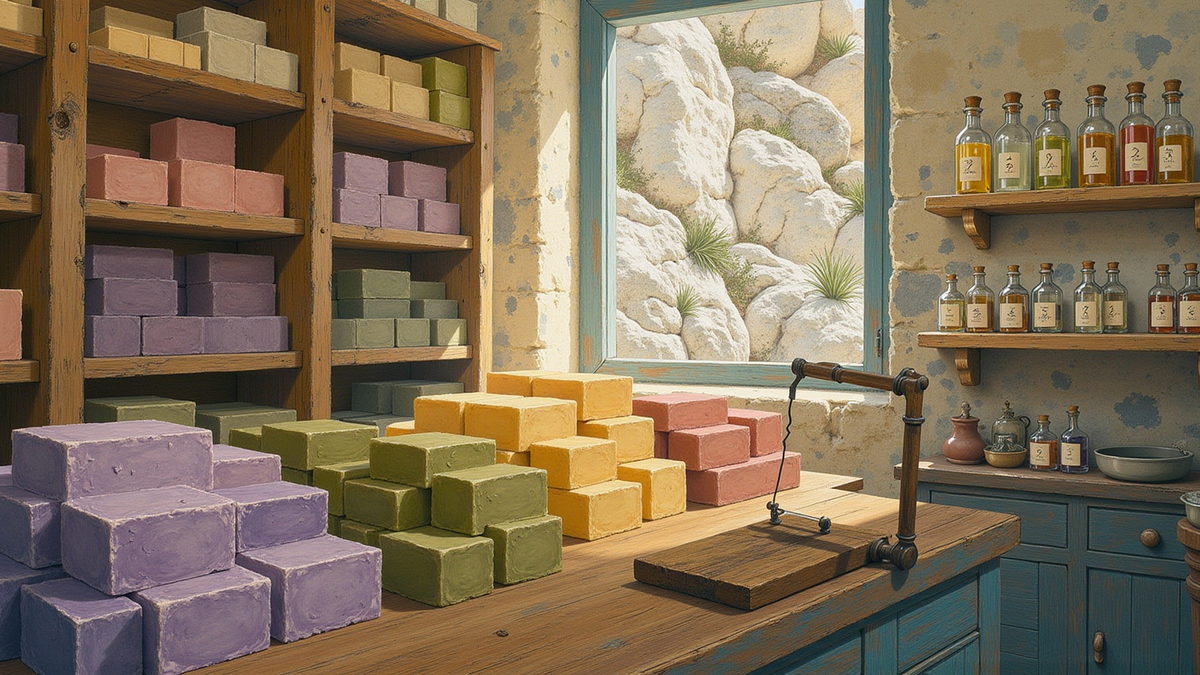
By the quarry door there is a shop, and the shop smells the way I suspect heaven's storeroom smells. Soap, in bricks, cut off great slabs with a wire — soap the colour of lavender, of honey, of that yellow stone — and behind the soap, in small bottles with handwritten labels, scents they make in the house. Nothing with a famous name on it. Just somebody's good nose, bottled. I have carried Rose home a correction, and I have carried her a colour. This country's real trade is scent — it grows perfume the way other places grow wheat — and so I did a brave thing, for me: I told the woman behind the counter about Rose, whom she will never meet. Rose is sensible, and laughs easily, and has worn the same scent since before our children could walk. Then I asked her to choose. She took her time. She tried three of them on the back of her own wrist, frowning like a judge at a village show, and then she held one out and said, this one, and I did not argue. It is a small bottle. It smells, to me, like this part of the south — but I am not to open it again; it travels wrapped in a sock, in the corner of my case, the way the precious things do. And a postcard from the same shop went into my breast pocket, for later. Even the errands were good, that day.
That was the day of stone. The bench took my report in the evening — the wall still warm, the lantern clicking on, the fountain carrying the conversation — and I let the tea out of my bag at last. You may know, if you have travelled with me before, that my tea and I have an understanding: it crosses countries and is never poured. That evening I poured it. After two crossings of France it seemed only fair, and we sat there together, the tea and I, not saying much about the years before. The swallows went up. The lantern did its small work. Second evening on the bench, and the village nodded at me in the singular now — ah, it is him — which is a promotion, if you want to know, from being nobody at all.
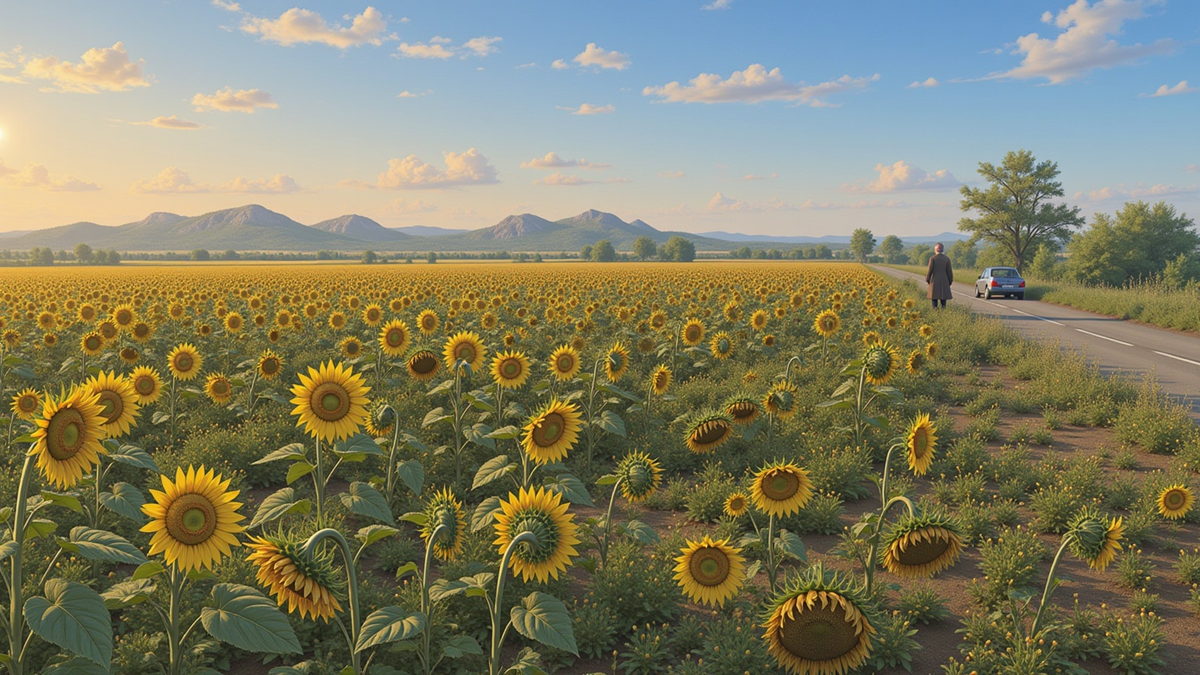
The second day went the other way entirely. Downhill, and south, and it kept going south — the day of water. On the fifth of July, on the road south from the hills, the sunflower fields were all standing at attention, and every one of them faced me. Thousands of heavy golden heads turned my way, like an audience that had taken its seats early and mistaken me for the programme. I stopped the car on the verge and stood before the first rows for a while. Being looked at by a hundred thousand flowers ought to be unnerving, and is instead very restful, because not one of them was looking at me at all. They had business with the sun, which happened to be over my shoulder; I was standing in front of something wonderful, and I could stay as long as I liked.
After the sunflowers the land began to give things up. It gave up its hills first, then its vines, then most of its trees, and what was left was flat and silver-green and full of sky — the Camargue, where the great river that has been keeping me company all this journey finally lies down, splits itself into fingers, and feels its way to the sea through salt and reeds. The air changed through the open window. Salt, and warm mud, and distance. You can smell distance, in flat country. It smells like weather that has not arrived yet. The roads there run on low banks with water on both sides, and they are one car wide, and it was on one of those that I met a lorry loaded with salt, coming the other way with no intention in the world of reversing. So I reversed. A hundred metres, maybe more, at walking pace, with the water waiting politely on either side — some of the worst reversing of my career, and my career is longer than I care to say. When I finally reached the wide place and let him by, the driver raised one finger off the wheel, which in the language of working men everywhere means: you did the right thing, and we will never speak of how badly.
And then the water went pink. I want to be accurate about this, because I would not have believed it either. At Salins de Giraud, at the bottom edge of France, they harvest salt from open water — shallow lagoons, walled and channelled, where the sea is invited in and the sun is asked to do the rest — and the saltier the water gets, the pinker it turns. Something microscopic lives in water that salty, lives nowhere else, and the pink is its doing. There is a viewing mound you can climb, and from the top of it the pans go out to the horizon, and no two of them had agreed on a colour: rose next to copper next to a pink with grey thinking about it, next to one pan so vivid it looked like wet paint. The salt itself they rake and carry off to be piled in white hills somewhere beyond all this — none of it in sight from the mound. Pink water, pale banks, and the flat blue sky over it all. I stood on that mound a long time, doing my old habit — checking what I saw against the map in my head — and the map in my head had nothing. Thirty-four years in the trade, and nobody had ever asked me to draw water the colour of a rose garden. We marked these pans with little white squares and the one word, salt. It is the truest word available and it tells you nothing at all.
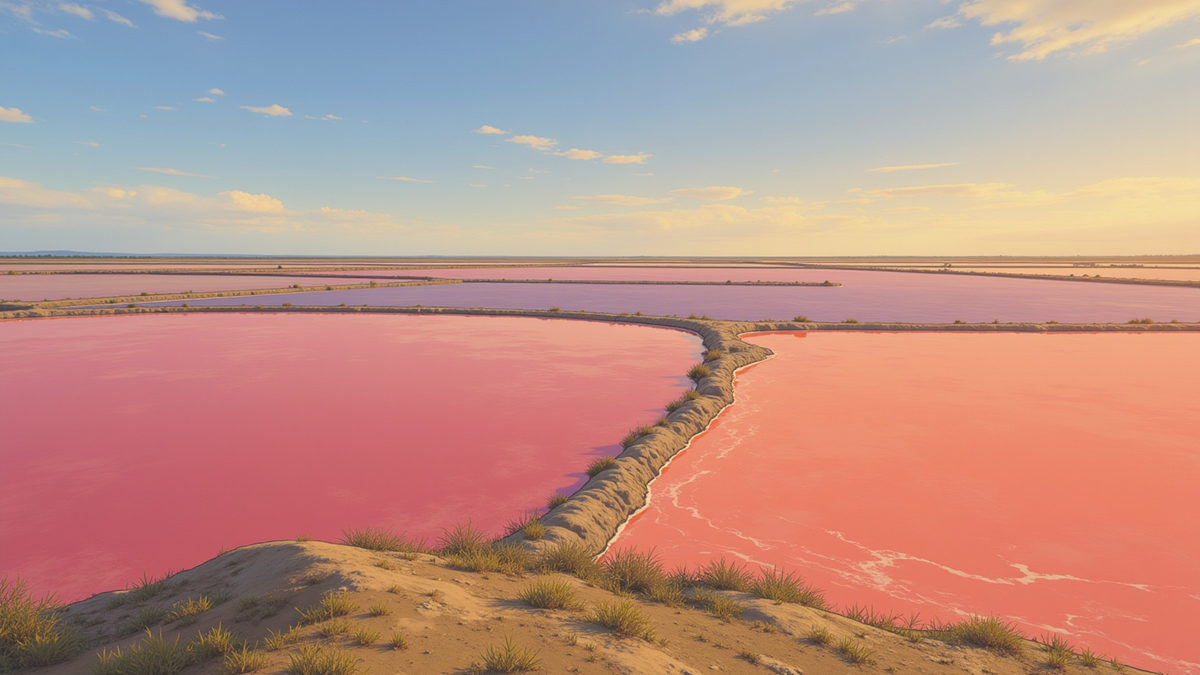
Salt is farmed by waiting, and that is nearly the whole method. The sea is let in, the gate is closed behind it, and then for months the sun is left alone to do the one thing it knows. Nothing in the work can be hurried, and nobody there was trying: one machine the size of a toy moved along a far bank, slow as an hour hand, and the wind came across the pans, roughened the pink a shade, and carried on, and past the last pan there was a thin blue line that was the actual sea, keeping its ordinary colour like the one sensible member of the family. The finished salt goes off to be piled in white hills somewhere out of sight — the lorry I reversed for on the bank was carrying some of it — and I have no doubt the hills wait with the same patience as everything else down here. I have measured a good many things in my working life, and I know slow work when I see it. This is the slowest harvest there is, and the quietest — a crop with no leaves and no green, nothing a man can do to help it along, and so the men, quite sensibly, stay out of the way and let the water and the light get on with it. We could all learn something from salt, I think. It becomes itself by lying still.
The last stop of the water day was a bird park at Pont de Gau, on the road to the sea, where the lagoons are kept for the birds and the birds know it. At the gate the keeper told me the ticket window closes at six, but the evening does not — once you are in, you may stay until the light goes. A couple had pulled up behind me, doing arithmetic about whether forty minutes was worth the price of admission, so their tickets went on mine. The birds are best at closing time; somebody had to tell them. And there, standing in the shallow water on their impossible legs, were flamingos. Wild ones. Hundreds. I must say this plainly, because it is the fact of the day: I did not know there were flamingos in France. I spent thirty-four years drawing this country, one way and another — its coast, its rivers, the very lagoons I was looking at — and not one map I ever touched said anything about flamingos. The map is honest about what it knows, and it does not know everything, and I find I am glad. A country should keep a few things off the record.
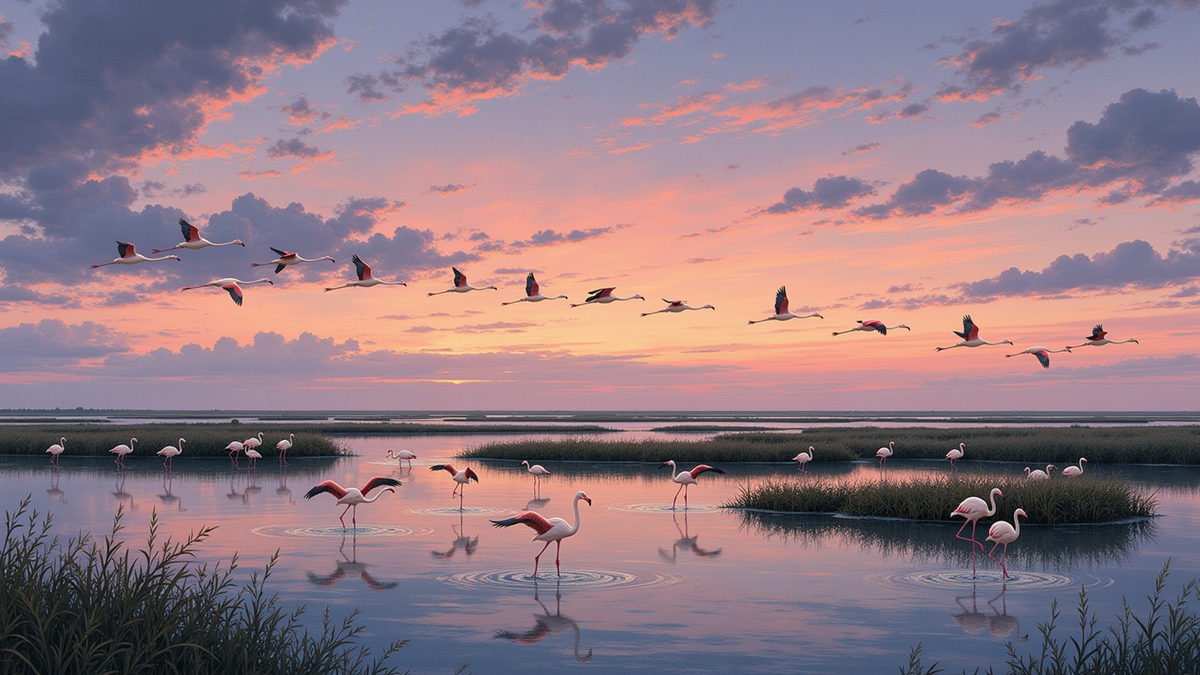
I gave the birds the time they deserved, which turned out to be all of it. A flamingo, up close, is a very calm event. It stands in the shallow water on one leg, with the other folded away like an umbrella that will not be needed, and it feeds with its head upside down, sweeping that great bent beak through the water as though rinsing it — no serious bird would feed that way, and the flamingo does not mind, because the flamingo is not trying to impress anyone. And all the while the flock murmurs to itself, low and contented — hundreds of small conversations that nobody needs to finish. And every so often a few of them took it into their heads to move, and that is a sight to behold. A flamingo cannot simply rise; it has to run across the water first, wings clapping — slow, unhurried claps, like polite applause — until the air finally agrees to take it. And landing is the same thing played backwards: the long glide down, the wings clapping the air to brake, the legs reaching for the shallows, a few running steps on the water — and then it folds itself away and goes back to being calm, as though nothing at all had happened. The young ones are grey. They have not eaten enough of the lake yet; the colour comes with the meals. And there is the fact I will be carrying home: the birds are pink for the same reason the water is pink. The same small creatures that colour the pans colour the birds that eat them, beakful by beakful, and so the pink goes up out of the water and into the wing. Nobody dyed anything, and nobody decided. The land is passing one colour along, hand to hand, and it has been passing it along since long before there was anyone standing on a path to admire it. A whole coast keeping a single colour in circulation. I let that be enough for a good while.
I stayed as the keeper said I might, out along the paths between the lagoons, while six o'clock became seven and the day started packing up behind the reeds. This is the hour the birds come home. They came in low over the water in small delegations, wings the colour of the salt pans they had spent the day in, and they put their long legs down like men wading who cannot swim, and folded up, and settled. The late ones you heard before you saw — big slow wingbeats, a sound like someone gently shaking out a blanket — and the water took each arrival with hardly a splash, closing behind them the way it closes behind rain. The water went from silver to gold to a quiet grey-rose, as though the lake had been taking notes on the flamingos all day. By the end I was hardly walking — strolling at the pace of the light itself, with the second postcard out of my pocket, begun and not finished, because the light was going faster than my sentences. No motor anywhere. Just wings arriving, and water saying small things, and somewhere behind me a night bird clearing its throat for later. France ran out right there, in a lagoon full of pink birds going to sleep, and it ran out gently.
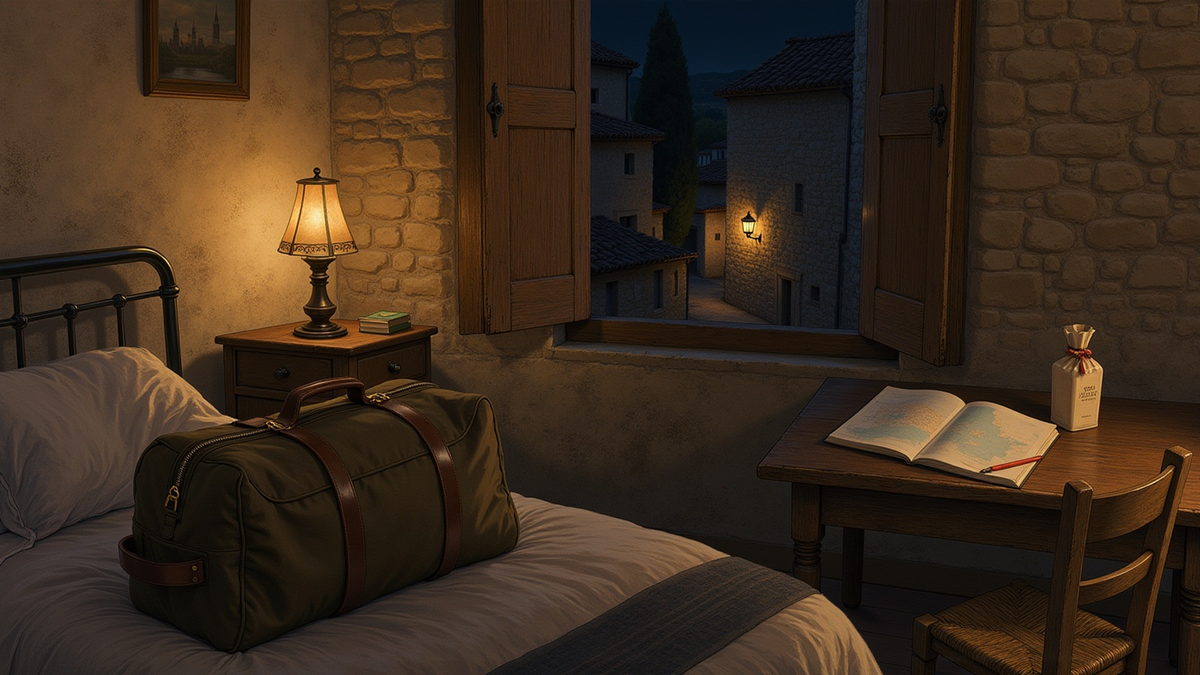
I drove home north in the dark with the windows down as far as the salt air lasted, and the perfume rode beside me in the glovebox, and the headlamps kept picking up moths and letting them go. Third evening. The bench had kept my place. The wall had kept its warmth. The lantern clicked on, and the empty teacup sat beside me for company, and I had nothing left to say, and neither did the village, and only the fountain had anything left, and the fountain can go all night.
The third day, I am pleased to report, came to nothing. We drove out, I almost said — after a lifetime of we, it says itself. I drove out, as far as a spot across the valley from Gordes, which is a town that grows straight up out of the top of its hill the way the best southern towns do, stone the colour of bread crust, arranged for the evening sun. You can walk its streets, and half the world was there walking them, so I mostly did not. I found the view instead, from across the valley, where the whole town fits in one look with the cypresses standing along the road like dark exclamation marks. I had an ice cream in the town for form's sake. Somewhere above us, that afternoon, the Tour de France went by — the whole town leaned uphill and cheered, and I stood in a crowd four deep and cheered with it, and I can tell you honestly that I never saw a single bicycle. It remains one of the best things I have attended. And that was the day. A view, an ice cream, a race I heard and did not see, and home early on the small roads with the sunflowers facing the other way now, seeing the evening in. The day of nothing much. Every good journey should carry one; it is the margin on the page.
And now it is late, and the case is packed, and the perfume went in last, wrapped in its sock, in the corner where the precious things ride. The unfinished postcard from the lagoon is in the atlas, holding page thirty-eight. I sat on the bench a last time tonight and did the ritual pencil work, one mark for each journey, and this journey's mark was a new kind for me. All my working life a correction meant the map was wrong. But page thirty-eight is not wrong about this village — it is silent about it, which is a different failing, and a gentler one, and so the pencil had gentler work to do: a dot. A small firm dot on the empty ground an hour south of Avignon, and no name beside it. The name is the village's own business. I was only ever a guest here. Four evenings now on one bench, and by the third the village had stopped performing for me — no place performs for its regulars — and that, I have decided, is what the dot records: not where the village is, but that it expected me. You can cross a whole country and see nothing; you learn a place by coming back to the same corner of it until it treats you as furniture. It took three evenings. It has taken me most of a lifetime to learn that it only takes three evenings.
Rest now. The village will keep the dot. The bench holds its warmth long after the wall gives up, and the lantern is on above it, doing its small work for the moths, and the fountain is talking to the empty square — it will talk till morning, and never once repeat itself. Away south in the dark the salt pans are lying under the stars in their different pinks, and the flamingos are standing asleep in the warm shallow water, heads under wings, hundreds of them, perfectly safe. The sunflowers have all turned east by now — they are waiting where the sun will be, which if you think about it is the most hopeful thing a field can do — and the white town on its hill is empty of visitors, and the quarry in the hillside is dark and cool and perfectly still, resting between colours. Even the paintings are asleep in there. The whole south is doing what you are doing now: settling, one small sound at a time, into the long quiet. The day is over, and it went well, and nothing more is asked of you. Let the fountain have the last of it.
Goodnight from the bench, under the lantern. Goodnight from the village too small for a name. Goodnight from Henry.